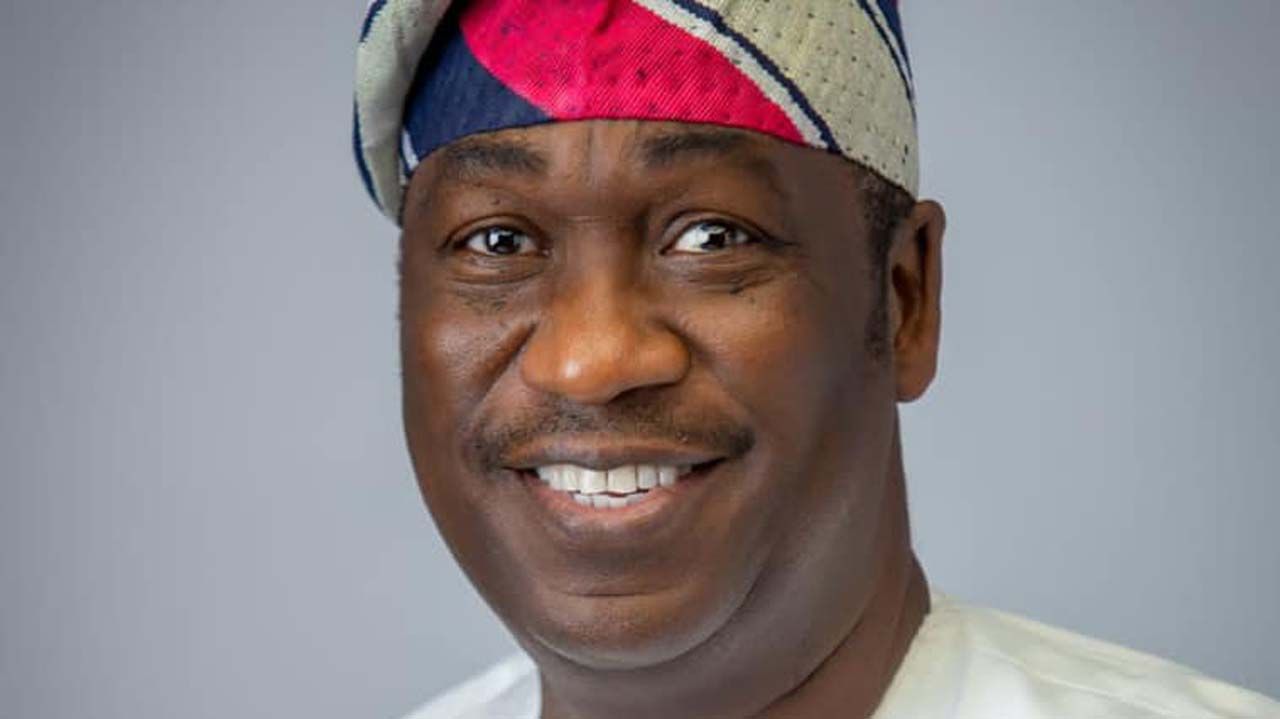
Lagos State has laid more than 3,000 kilometres of fibre-optic infrastructure across the state between 2019 and 2025, with the government working towards a 6,000-kilometre unified fibre network, Deputy Governor Dr Kadri Obafemi Hamzat has said.
Hamzat disclosed this while delivering a keynote address at PodFest 2026, where he spoke about the Lagos State Government’s investments in digital infrastructure, technology, innovation and the creative economy.
According to him, the state’s investment in digital infrastructure is part of its approach to treating digital infrastructure as core infrastructure.
“We are laying the data backbone of this continent,” Hamzat said.
He said Lagos had laid more than 3,000 kilometres of fibre-optic infrastructure between 2019 and 2025 and was ultimately close to its target of 6,000 kilometres of unified fibre network.
He also said the Lagos State Infrastructure Maintenance and Regulatory Agency (LASIMRA) had achieved a total of 6,000 kilometres and attracted more than $22 million in direct investment commitments for further cable expansion.
Hamzat said the rollout of the next phase of fibre ducts along strategic corridors was underway.
Explaining the government’s focus on digital infrastructure, he said faster connectivity would have practical benefits for different sectors.
“For a creator, that means faster uploads. For a startup, it means lower cost. For a school or a health centre, it means access. And for our hospital, it means faster record retrieval,” he said.
Lagos expands smart-city infrastructure
Hamzat also said the state was using geographic information systems to map and manage its data infrastructure, while advancing 5G-enabled smart poles and extending the Lagos Smart City programme.
He disclosed that about 650 cameras had been created, with the government targeting 3,000 cameras.
“We’ve created about 650 cameras today. Our target is 3,000, but it’s very, very expensive. So we are taking it in batches,” he said.
He linked the investment in security infrastructure to the need to create an environment where people can work and create.
“Because creativity flourishes when people feel safe,” he said.
Technology and public services
The Deputy Governor also highlighted the use of technology in public services, particularly healthcare.
He said Lagos was linking its hospitals so that patient information could be accessed across facilities using a patient’s name and record number.
He gave the example of a patient who becomes ill in Aguda and subsequently travels to a hospital in Surulere.
According to him, the system being developed should enable the hospital in Surulere to access the patient’s information using the person’s name and record number.
“What we are building is important for a city,” he said.
Hamzat also pointed to the state’s use of digital payment infrastructure in public transportation.
He said 6.2 million Lagosians currently carry Cowry Cards, adding that the state’s target was for commuters using the BRT, ferry and rail services to be able to use a Cowry Card across the transport system.
Government support for research and innovation
Hamzat further disclosed that the Lagos State Government was supporting research and development projects through the Lagos State Research and Innovation Council.
He said the state was supporting no fewer than 90 research and development projects across health, education, mobility, film, technology, climate and culture.
He also said that more than ₦1.2 billion had been committed to innovators and researchers.
“If you have ideas, hey, better log in,” he said.
The Deputy Governor also highlighted support provided through the Lagos State Employment Trust Fund, saying more than 200,000 small and medium-scale businesses had received ₦15 billion in loans and grants.
He said the government’s support also included training because some business owners lacked knowledge of business management, employee relations and accounting.
Government commitment to creative-sector payments
Hamzat also made a specific commitment concerning government payments to creative-sector suppliers.
He said Lagos State is one of the largest buyers of creative work, including film, photography, design, campaigns, sound and events.
“Lagos State should pay creative suppliers on time, less than 30 days,” he said.
He said the commitment should be measurable and that the state should be able to pay faster for creative work.
Technology beyond physical infrastructure
Hamzat said the future of Lagos would not be shaped by physical infrastructure alone, but also by creativity, technology and enterprise.
“The future of Lagos will not be shaped by physical infrastructure alone. It will be shaped by creativity, ingenuity, and enterprise of its people,” he said.
He added that the state’s development remained unfinished, describing “The Lagos We Are Building” as a work in progress.
“We still have a lot of things to build,” he said.
Hamzat also challenged technology founders and builders to develop tools for distribution, analytics, payment, rights management, localisation and artificial intelligence that understand African languages and accents.
“The next big platform for African stories should be built by Africans for the world,” he said.