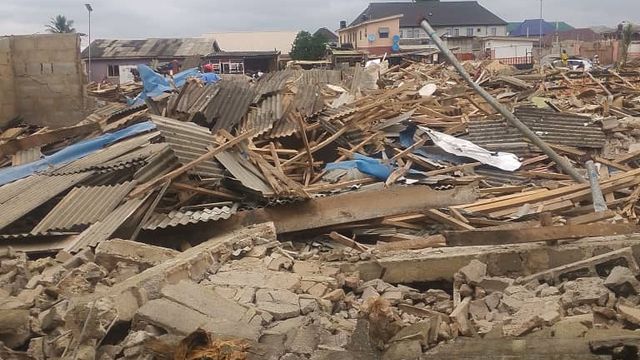
Residents of Ikola, in the Alimosho Local Government Area of Lagos State, are counting their losses after a violent clash between Yoruba and Hausa residents left several people dead and properties destroyed.
The crisis, which occurred around the Power Line area, reportedly followed an earlier dispute that led to the death of a Yoruba man.
A resident familiar with the incident, who spoke to Nigerian NewsDirect on condition of anonymity, alleged that the man was killed by a Hausa man following a dispute over money, after the suspect refused to pay the full amount involved in a transaction.
The resident added that the incident heightened tension in the area, particularly because another young man had allegedly been killed earlier.
Residents reportedly took the matter to the police, seeking justice and intervention.
However, the situation allegedly worsened during the police handling of the matter. Sources familiar with the incident claimed that a statement made during the process was interpreted by some youths as a call to pursue those believed to be responsible.
This reportedly led to attacks on properties linked to Hausa residents, with several houses and shops set ablaze.
Nigerian NewsDirect could not independently verify the allegation concerning the police response as at the time of this report.
However, the Lagos State Police Command provided a different account, stating that the clash began when suspected area boys stopped a tricycle rider and demanded ₦200 from him.
The rider reportedly refused, leading to the seizure of his tricycle. He later returned with others, resulting in a confrontation that left three people dead and two injured, according to the police.
The Lagos State Emergency Management Agency (LASEMA), however, reported four deaths.
Meanwhile, the aftermath has severely affected residents who were not involved in the violence.
At about 10:00 a.m. on Saturday, government officials accompanied by security personnel moved into the area and began demolishing houses, shops, and other structures along the pipeline corridor.
Affected residents lamented that they were not given adequate notice, stating that they had invested heavily in their properties and had no connection to the clash.
Another resident familiar with the situation noted that many of the affected structures were built on government land reserved for a pipeline corridor, alleging that some locations were also being used for illicit drug sales and other illegal activities. These allegations could not be independently verified.
The exercise has raised questions about how residents were permitted to occupy and develop the area if the land was designated government property. Affected occupants are now demanding to know who collected unauthorized fees from them and why they were allowed to remain until the sudden demolition.
With security operatives deployed to prevent further violence and investigations underway, residents are left to navigate the aftermath of a crisis they had no hand in starting. For many, the immediate concern remains how to rebuild their lives, homes, and livelihoods.