
By Victor Orji
Delight Chilegide Olumati is helping push poetry forward into the Nigerian classrooms differently: barefoot, curious, and speaking the language of children. Her initiative, Poetry Meets Children, is less about literary evangelism and more about re-imagining access: giving poetry back to the child as something instinctive and powerfully reflective.
Born from a personal disconnect with poetry’s opacity in school curricula, Olumati’s foundation has grown from its quiet Ilorin beginnings to a forceful presence in Rivers State, reaching hundreds of children across orphanages, remand homes, and public schools. “This time, we were intentional about measuring our impact better than we did in the last state,” Olamati tells me. “Our core goal remains the same: to help every child find their voice through poetry.”
In this conversation below, she speaks about the origin of the project, the politics of access, the poetry of empathy, and why sometimes, despite rejection from rigid institutions, you must simply move, anyway.
Poetry Meets Children is a project that feels so personal to you. From where was the vision born?
Growing up, I disliked poetry. That dislike came from not understanding it—and from the kind of book we were introduced to it with. As I got older and discovered the beauty of poetry for myself—how it doesn’t have to sound like Shakespeare to be valid or powerful—I kept wondering why our teachers back then didn’t make it easier for us to connect with. And I wasn’t alone; many of my classmates felt the same way. Poetry Meets Children was born from my desire to be who I needed back then. To teach poetry the same simple, beautiful way it eventually found me.
Can you tell us about the recent project with students across various schools in Rivers State? What were the goals and objectives for this particular edition? Has it changed from what you told Creative Writing News, where you said, “Our goal is to use poetry to help every child find their voice”?
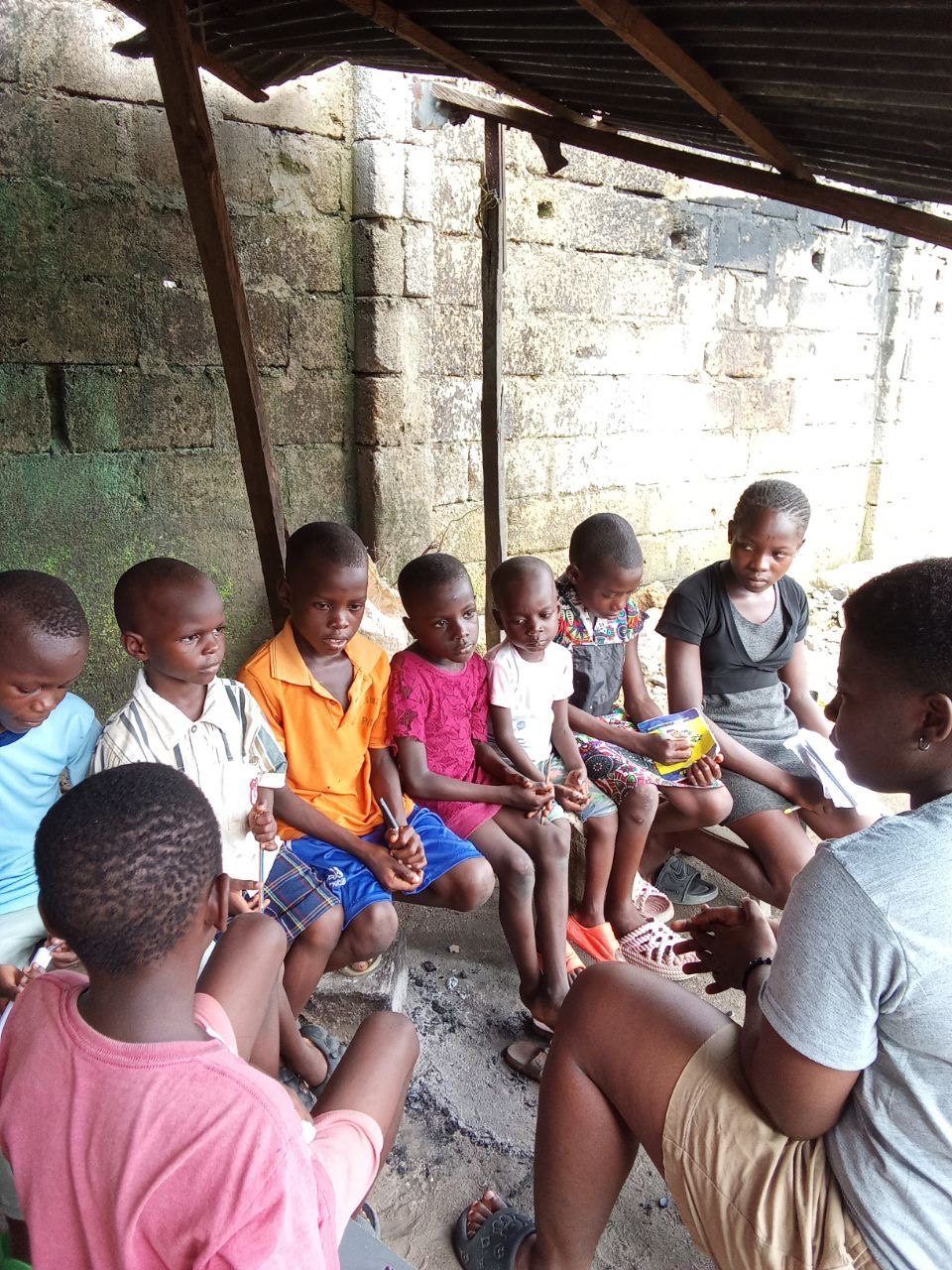
The Rivers State edition went far beyond what I imagined. Our initial goal was to reach 500 children—to give them access to our poetry workbook and collection, and to help them see how simple and relatable poetry truly is. Although we didn’t meet our full budget, we worked with what we had and did what we must. We visited five schools, a batcher village, three orphanages, and one Remand Home—spending between 3 to 7 days in each place.
What happened in those spaces felt like magic. Many of the children wrote what I can only describe as poetry that was made just for them—raw, true, and incredibly moving. This time, we were intentional about measuring our impact better than we did in the last state. We collected feedback, and from the poems the children wrote, we compiled ‘The World Through Our Eyes,’ a collection that will be published soon. It features writing from 51 children across the locations we visited.
Our core goal remains the same: to help every child find their voice through poetry. But we also know not every child will become a writer—and that’s okay. We deeply honour the ones who gave us their full attention, and even those who simply stayed present with us. Every child mattered.
How does this project compare to the first edition, which was held in Ilorin? What did you learn from the first edition that informed this second edition?
Ilorin was where it all began—and honestly, I had no manpower. I was everything: the teacher, the videographer, the photographer, the assistant, the reader. It was overwhelming. We spent two weeks at every location, which in hindsight was too long. We only met 36 children in that entire span, when in Rivers State, with the same amount of time, we reached over 200—and half of them made it into the collection we’re curating.
The impact in Ilorin wasn’t as wide, but it was deeply necessary. It was our first space, and it gave us room to try, to fail, and to learn. We discovered that meeting children goes beyond just showing up—it’s about how you show up, your teaching style, your energy, and how you adapt. Ilorin taught us that. It gave us our first lessons, and those lessons shaped everything we did differently in Rivers.
Can you describe the residency program for the students? Was it a camping thing? What activities did it entail, and how did the students respond?
It wasn’t a camping experience—at least not for the children. I simply called every stay a residency. We’d go to a location, stay with the children for about 3 to 4 days, and return each day until our time there was complete.
Each residency began with introductions—our team members, and then the children. We’d ease into the idea of writing and poetry, presenting it as something as simple as noticing and interpreting the world around them. We introduced figures of speech using something they were familiar with: superheroes. We told them figures of speech are just like superheroes—each with their own powers, showing up in different ways to help us describe what we notice in more creative, playful, and expressive ways.
From there, it was all imagination and creativity. They wrote, they played with words, and we read to them from A Tender Awakening before wrapping up each session.
Day two was a deeper dive—more figures of speech, more writing. By day three, they were writing pieces for possible inclusion in our publication. We rewarded children who had been especially active or expressive throughout our stay, took pictures, said our goodbyes—and left with full hearts.
The children responded with so much energy and openness. Many of them wrote things we didn’t expect. It was beautiful to watch poetry become something they could see themselves in.
How did you tailor the poetry workshops to engage students of different ages and skill levels? Or was it particular to a certain demographic?
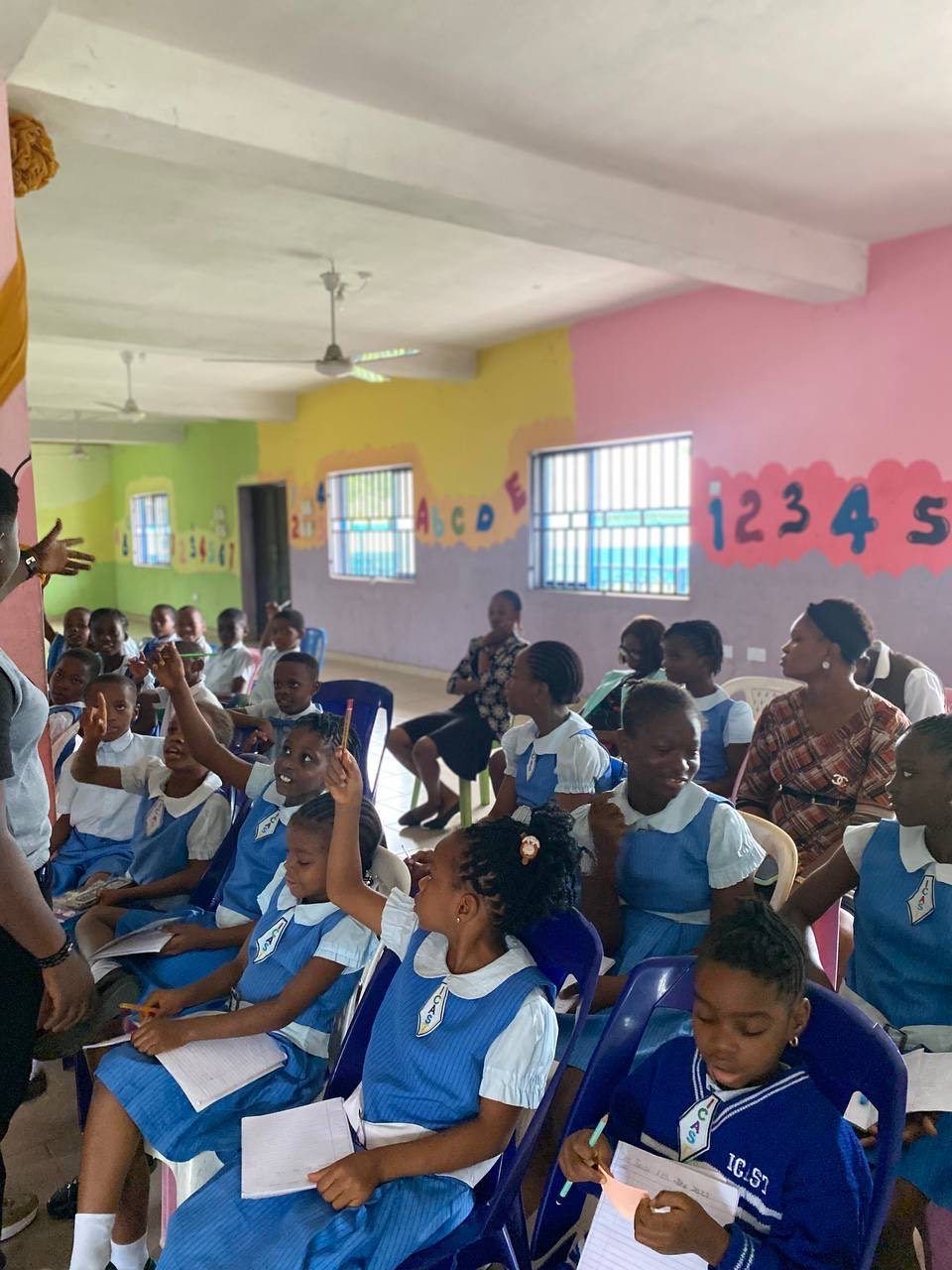
We work with children between the ages of 7 and 17, and we’re very mindful of their different levels of exposure. For children aged 10 to 17, many of them have already encountered basic concepts like similes, so we focus less on introduction and more on deepening understanding. We let them flex their creative muscles while we guide and refine their process.
For the younger ones—especially those around 7 to 9—we take it back to the very beginning. We introduce the concept of writing itself, why it matters, and how it can help them make sense of the world around them. We keep it fun, simple, and imaginative, always tailoring our approach to meet them where they are.
What role did the teachers or school administrators play in supporting the project?
Schools and administrators are our host partners. They’re the ones responsible for the children we hope to work with—and in the case of batcher villages, that role often extends to the parents as well. Before any visit, we hold proper meetings with them where we introduce ourselves, the foundation, and the work we do.
They can either accept or decline our proposal. When they accept, we honour their rules and carry out the sessions as planned. These people—teachers, administrators, and parents—are crucial to the work we do. They need to understand who we are, what we do, and why we do it, before trusting us enough to let us show them how we do it.
What impact do you hope this project will have on the students’ appreciation for poetry and creative writing?
For me, it’s simple. I want to see a generation that grows up understanding that emotional intelligence—empathy, expression, and the ability to see life beyond themselves—makes the world work better. Poetry does something for the mind that the English language alone can’t fully explain. I know this because it’s helped me—how I communicate, how I see life, how I understand and relate to people.
I believe this is possible for others too—especially for children. Because what’s instilled early doesn’t leave early. If poetry can meet them now, in a way that feels true and accessible, it can shape how they move through the world.
Did you notice any changes in the students’ confidence or self-expression through poetry during the project? Any particular instances?
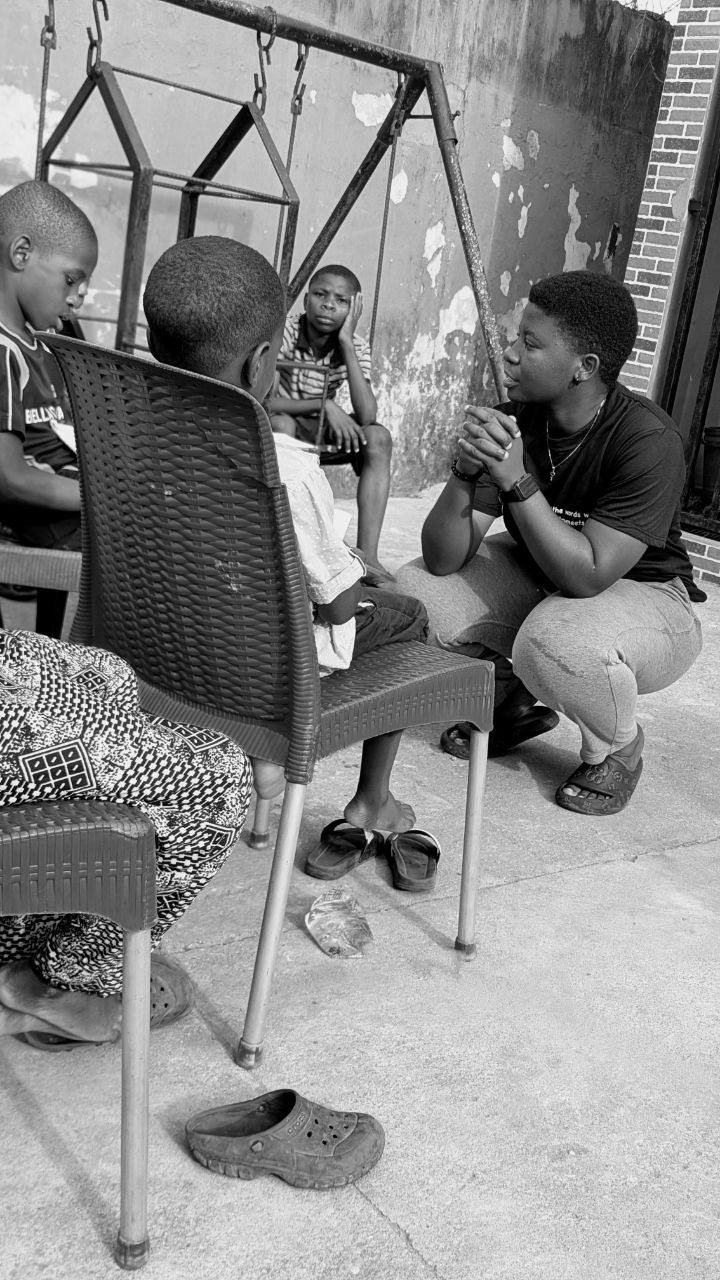
Oh yes, I did. It was one of the most beautiful things to witness. In the feedback forms from both students and teachers, you could see it clearly—many wrote that they noticed the children becoming more expressive and attentive, especially toward poetry, which they usually showed little interest in.
One child wrote, “I remember that Aunty Delight taught us to be confident, and to always hold on to the truth that expression and questions are bigger than assumptions and conclusions.” That stayed with me. It reminded me why this work matters—poetry isn’t just about writing, it’s about helping them find their voice and use it without fear.
What challenges did you face in implementing this project, and how did you overcome them?
Some of the schools were headed by people who struggled to see life beyond skirts and gowns—very rigid in thought. Others were led by overly religious women who wouldn’t allow a girl in dreadlocks to teach their wards. There was hardly any room to navigate those situations. So we did the only thing we could—we left and respected their rules. It sucked, but it was what it was.
I wrote more about that experience on my blog, because it stayed with me. Not every space will welcome you, no matter how good your intentions are—but we move, always.
What was funding like? How can supporters get involved with the Poetry and Children foundation?
So far, funding has come from kind donors and a lot of personal spending. It hasn’t been easy, but the support we’ve received—both financially and emotionally—has kept us going.
Our account details are always available for donations, and we’re open to further conversations for anyone who wants to support in any way—whether through partnerships, volunteering, or sponsoring specific programs. Every little bit counts, and we’re always grateful for those who believe in what we’re building.
Can you elaborate on the plans for sustaining the impact of the training series, particularly in terms of providing continued guidance and coaching to the participating children?
For every location we visit, we create a database. The goal is to make follow-up possible—regular check-ins with the children and a steady line of communication with their guardians. We stay available for questions, encouragement, and continued support.
Some students naturally show more interest or promise, so we give those ones even more attention—more check-ins, more resources. We also build relationships with the schools themselves. A few have reached out after our sessions, inviting us back to work with specific children who needed more support or wanted to keep learning.
It’s not just a one-time visit for us. We’re building something long-term, one child at a time.


