
The Federal Government has expanded its Compressed Natural Gas (CNG) infrastructure programme to four more federal universities, as part of efforts to reduce transportation costs for students and staff.
The Midstream and Downstream Gas Infrastructure Fund (MDGIF), in partnership with FEMADEC Energy Limited, has commissioned CNG daughter stations at the University of Lagos (UNILAG), University of Ibadan (UI), Federal University of Technology, Akure (FUTA), and Federal University Oye-Ekiti (FUOYE).
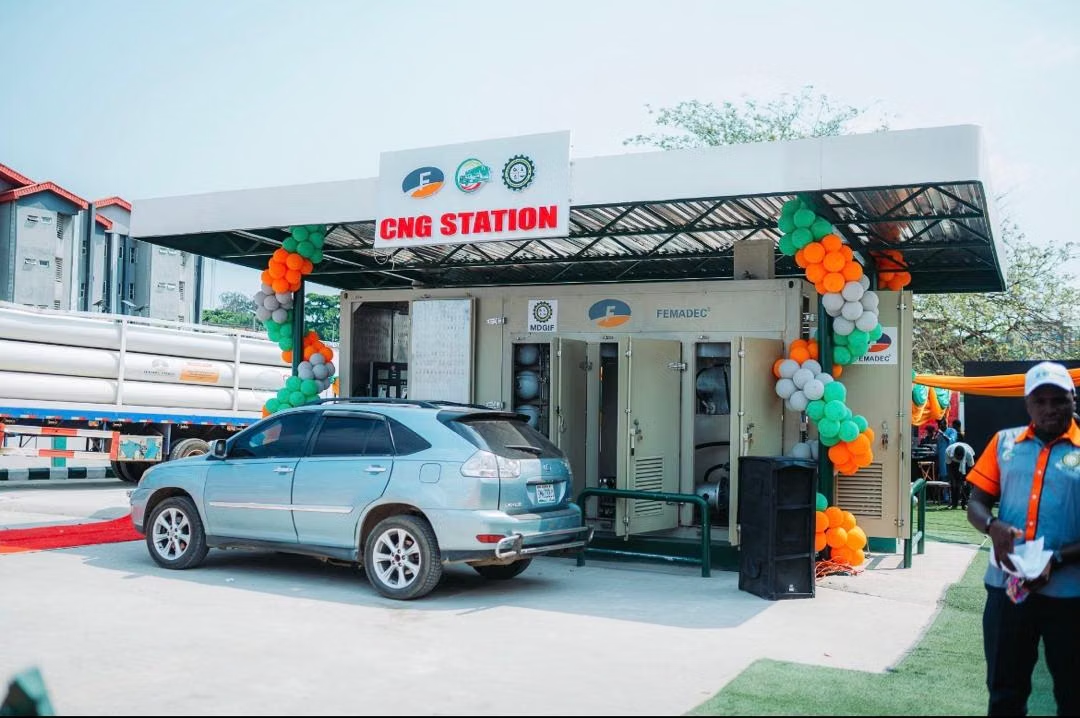
The commissioning was led by the Minister of Education, Dr Tunji Alausa, at the University of Lagos, where the facility also includes a vehicle conversion centre.
The development is part of the Federal Government’s Special Palliative Relief on University Transportation (SPROUT), an initiative designed to lower commuting costs for students and university staff through the use of CNG.
The programme is expected to cover 20 federal universities, with the newly commissioned facilities bringing the number of universities served by the MDGIF and FEMADEC partnership to 11.
Speaking at the event, the Executive Director of MDGIF, Oluwole Adama, said the fund had supported the delivery of 25 fully operational CNG stations nationwide within two years.
He added that its portfolio currently comprises 31 projects and 205 infrastructure assets across the country, while nine additional university stations, mostly in northern Nigeria, are expected to be commissioned in the coming weeks.
Alausa said the initiative was aimed at addressing the rising cost of transportation faced by students, noting that savings on daily journeys between accommodation, lecture halls and laboratories could make a difference to their expenses.
The National President of the National Association of Nigerian Students, Comrade Babatunde Akinteye, also stressed the importance of ensuring that the programme translates into affordable transportation and reliable services on campuses.
Meanwhile, the Chief Executive Officer of FEMADEC Energy Limited, Fola Akinnola, said six more universities would receive stations before the end of the year, while the remaining three in the first 20-campus rollout were expected early next year.
Akinnola added that the facilities would also serve as practical learning centres, giving engineering and technical students exposure to gas infrastructure, vehicle conversion, maintenance and safety standards.


