
The Lagos State Wastewater Management Office (LSWMO) has intensified efforts to improve wastewater management systems through a strategic partnership with the Japan International Cooperation Agency (JICA), aimed at developing integrated and sustainable infrastructure across the state.
According to reports the initiative was the focus of a high level meeting held at the agency’s headquarters in Ikeja between officials of LSWMO and a JICA survey team
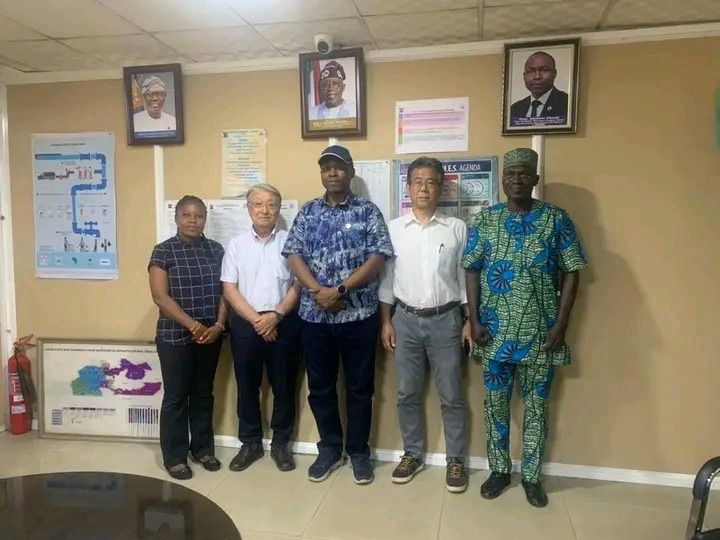
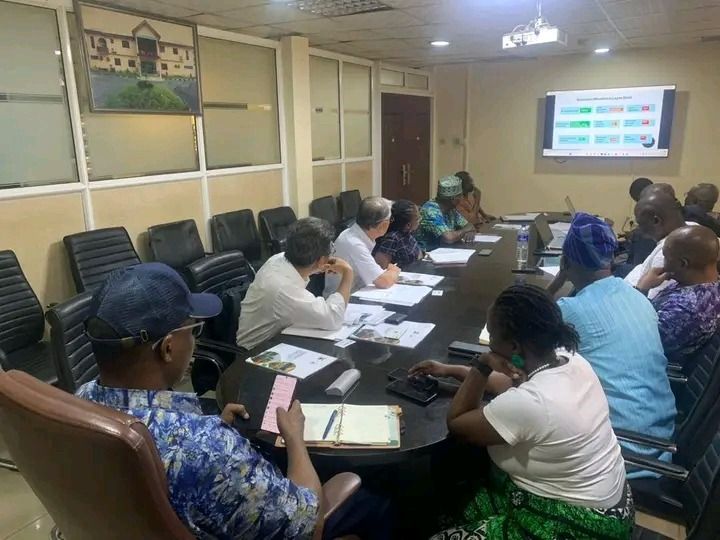
Speaking during the engagement, the General Manager of LSWMO, Engr. Adefemi Afolabi, described the agency as a critical component of Lagos State’s environmental framework, with a mandate to regulate and implement policies and programmes on wastewater management.
He noted that the agency has recorded notable progress in recent years, including strengthened regulatory oversight, expansion of wastewater treatment facilities, and improved stakeholder engagement across the sector.
Afolabi explained that the Lagos State Environmental Management and Protection Law of 2017 provides the legal backing for LSWMO’s operations, while the Lagos State Water Sanitation and Hygiene (WASH) Policy of 2024 offers a strategic roadmap for coordinated development in the water sector.
According to him, the WASH Policy identifies existing gaps in wastewater management and outlines actionable plans, targets, and institutional frameworks necessary to drive sustainable growth and service delivery.
The General Manager further highlighted the state government’s commitment to attracting private sector investment through its Public-Private Partnership (PPP) framework, noting that Lagos presents vast opportunities for investors in wastewater infrastructure.
“Creating an enabling environment for investment and improving service delivery remain key priorities. The PPP structure in Lagos provides a strong institutional framework that protects investments and ensures returns,” he said.
He added that the agency is exploring both brownfield and greenfield projects to expand infrastructure capacity and enhance revenue generation.
Afolabi also commended JICA for its sustained technical support and contributions to environmental development in Lagos, stressing the importance of collaboration with development partners in achieving long-term sustainability goals.
In his remarks, the JICA Team Lead, Mr. Teketoshi Fujiyama, lauded LSWMO’s structured and policy driven approach, describing it as a solid foundation for scalable infrastructure development.
Fujiyama noted that the engagement would provide deeper insights into the agency’s operations and help identify priority areas for technical assistance, capacity building, and integrated planning.
He disclosed that JICA is currently working with the African Development Bank and other partners on water-related projects in Nigeria, including initiatives under the EU Waterworks programme.
According to him, the agency is exploring strategies to improve water supply and distribution systems in Lagos, while also integrating wastewater management into broader urban planning efforts.
“Sustainable urban development requires a holistic approach to water resource management, including the integration of wastewater systems into existing and future infrastructure,” he said.
He further commended Lagos State’s PPP framework, noting that it would attract investment, improve efficiency, and ensure the long term viability of wastewater projects.
Other participants at the meeting included officials from JICA, the Lagos Water Corporation, and top management staff of LSWMO.


