Lagos State has shifted its approach to financing businesses in the creative sector, favoring low-interest loans over grants as part of efforts to promote sustainable enterprise and improve the survival rate of small and medium-sized businesses.

The state said the approach is being implemented through the Lagos State Employment and Wealth Creation initiative (LASMEC), an access-to-finance scheme for small and medium-sized enterprises delivered through cooperative structures in partnership with the Bank of Industry (BOI).
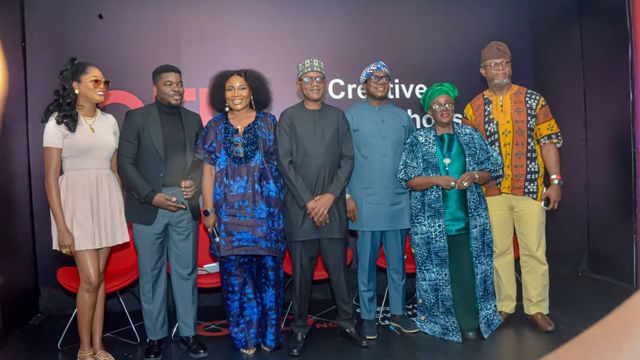
Speaking at the QED Creative Presentation Summit in Lagos, Dr. Olamide Okulaja, Technical Adviser to the Lagos State Ministry of Commerce, Cooperatives, Trade and Investment, said the scheme provides financing at an interest rate of nine percent without collateral, with the loans fully guaranteed by the state.
According to him, Lagos State contributes public funds alongside the BOI’s capital to reduce the cost of borrowing for beneficiaries.
Okulaja said the decision to use loans rather than grants was informed by the need to build businesses that can generate value and remain financially sustainable beyond government intervention.
He noted that while beneficiaries were often more interested in grants, access to free money alone would not necessarily solve the structural challenges confronting businesses.
“Money is not empathetic. Money follows value,” he said.
The technical adviser explained that beneficiaries of the scheme, including those operating within the creative economy, are required to undergo an accelerator program designed to equip them with the knowledge needed to properly deploy the funds.
He added that the training component was introduced because a lack of access to finance was not the only challenge facing small businesses; many entrepreneurs also lacked the technical and managerial capacity required to prepare viable proposals and utilize capital effectively.
According to him, the program is intended to bridge both gaps by providing entrepreneurs with financing while simultaneously strengthening their business skills.
Okulaja, who also serves as an adviser to the Lagos State Commissioner for Health and is a trained medical doctor, said government intervention should ultimately be measured by the value it creates rather than the amount of money distributed.
He maintained that a financing model combining affordable capital with business development support could provide a more sustainable pathway for creative entrepreneurs than a repeated dependence on grants.
The development comes as governments and private-sector stakeholders increasingly seek ways to convert Nigeria’s rapidly expanding creative output into commercially sustainable businesses capable of attracting investment and creating jobs.