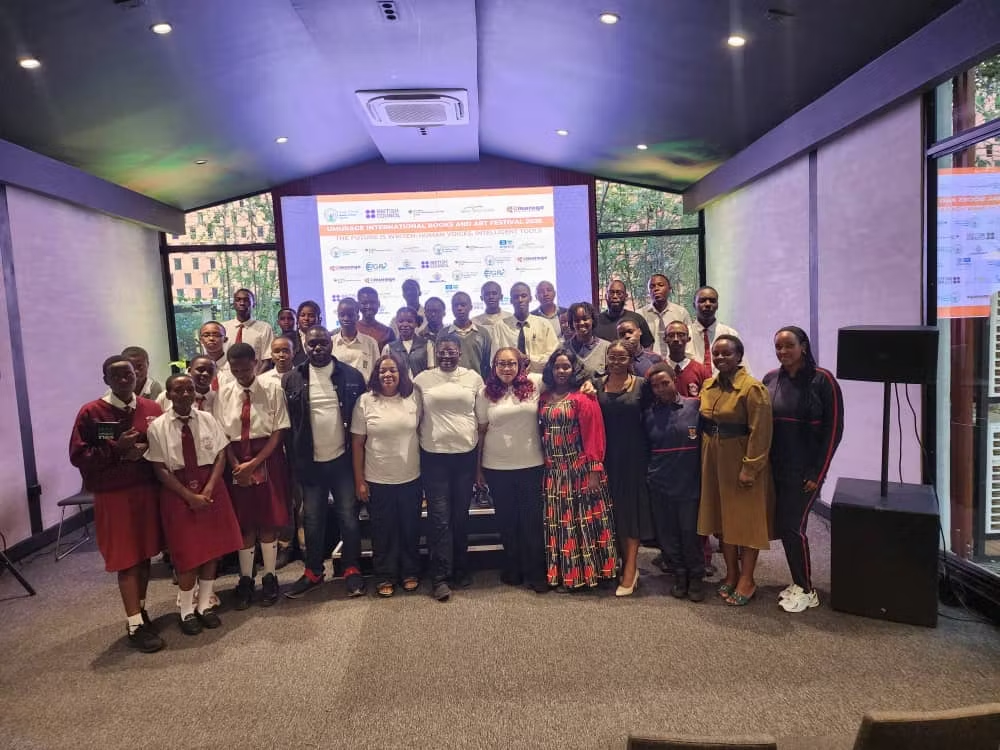
…Reflects on the place of human imagination in the age of AI
Nigerian poet and novelist Godson Osarenren has shared insights from his participation in the Umurage International Book and Art Festival in Kigali, Rwanda, where he led a poetry masterclass, discussed artificial intelligence and reflected on the country’s history of genocide and subsequent reconstruction.
Osarenren, founder and convener of Naija Poetry Fest, joined a delegation of Nigerian literary and creative professionals who travelled from Lagos to Kigali on September 29, 2026, for the festival, which ran from September 28 to October 3 under the theme, The Future Is Written: Human Voices, Intelligent Tools.
The delegation included Amarachukwu Chimeka, chief executive officer of Purple Shelves; Dr Ebidenyefa Tarila-Nikade; poet and publisher Servio Gbadamosi; and Ndidi Chiazor Enenmor.
For Osarenren, the visit was an opportunity to engage with Rwanda’s history, share Nigerian literary experiences and participate in conversations about the future of African creativity.
His interest in Rwanda had also informed an earlier literary engagement. In February 2026, Kede Aihie, a senior friend and father figure, invited him to contribute a poem to From Ashes to Ambition: Paul Kagame – An Inspirational Leadership, a forthcoming book examining Rwanda’s transformation.
The invitation to Kigali subsequently brought him into direct contact with a country whose experience of ethnic violence had long informed his reflections on identity, prejudice and the consequences of political manipulation.
The Nigerian delegation arrived in Kigali at about 7pm after connecting through Addis Ababa, Ethiopia, and was received by festival organiser Mutesi Gasana, who arranged their accommodation at Hilltop Hotel and Country Club.
Their first encounter with cultural exchange came over a familiar Nigerian meal. Although the delegation was served jollof rice, the absence of pepper prompted its members to offer the chef an impromptu lesson in preparing the dish the Nigerian way. The light-hearted episode preceded a more sombre engagement with the country’s past.
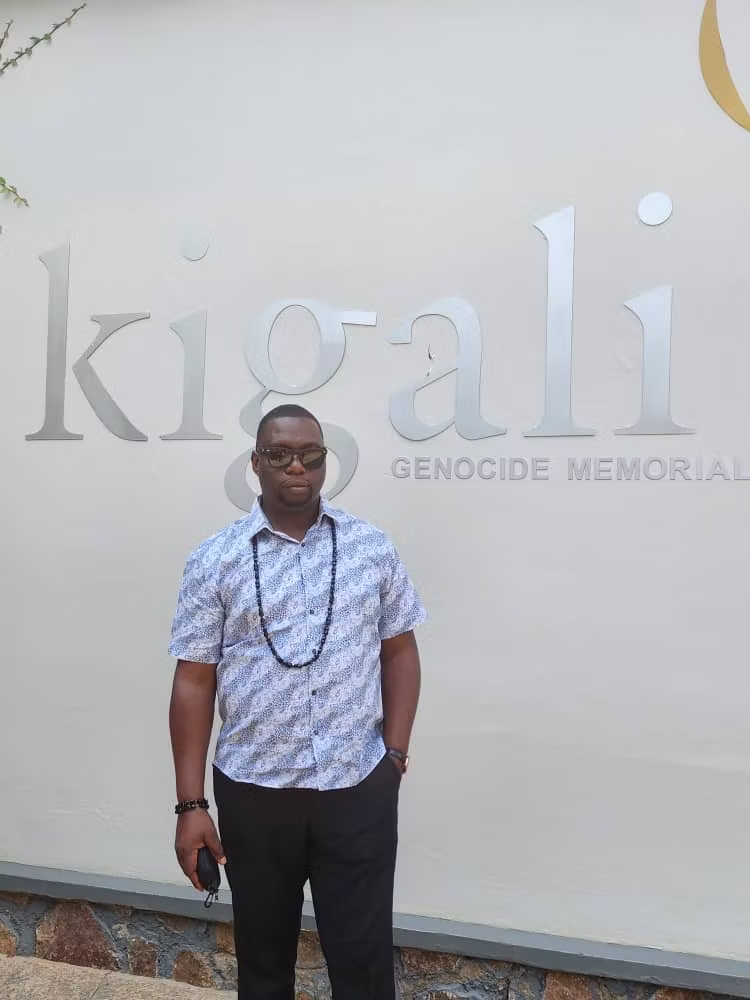
The delegation’s visit to the Kigali Genocide Memorial brought them face to face with the history of the 1994 Genocide against the Tutsi. The memorial is the final resting place of more than 250,000 victims. Across Rwanda, memorial sites commemorate the victims of a genocide in which an estimated one million people were killed. https://kgm.rw/visit/
For Osarenren, the experience offered a sobering encounter with the consequences of hatred and the weaponisation of ethnic identity. The memorial’s accounts of communities torn apart by violence and the betrayal of trust among neighbours reinforced questions he had long considered in his reflections on ethnicity.
The visit, he indicated, left him with a renewed sense of responsibility to question the prejudices and divisions that can erode shared humanity.
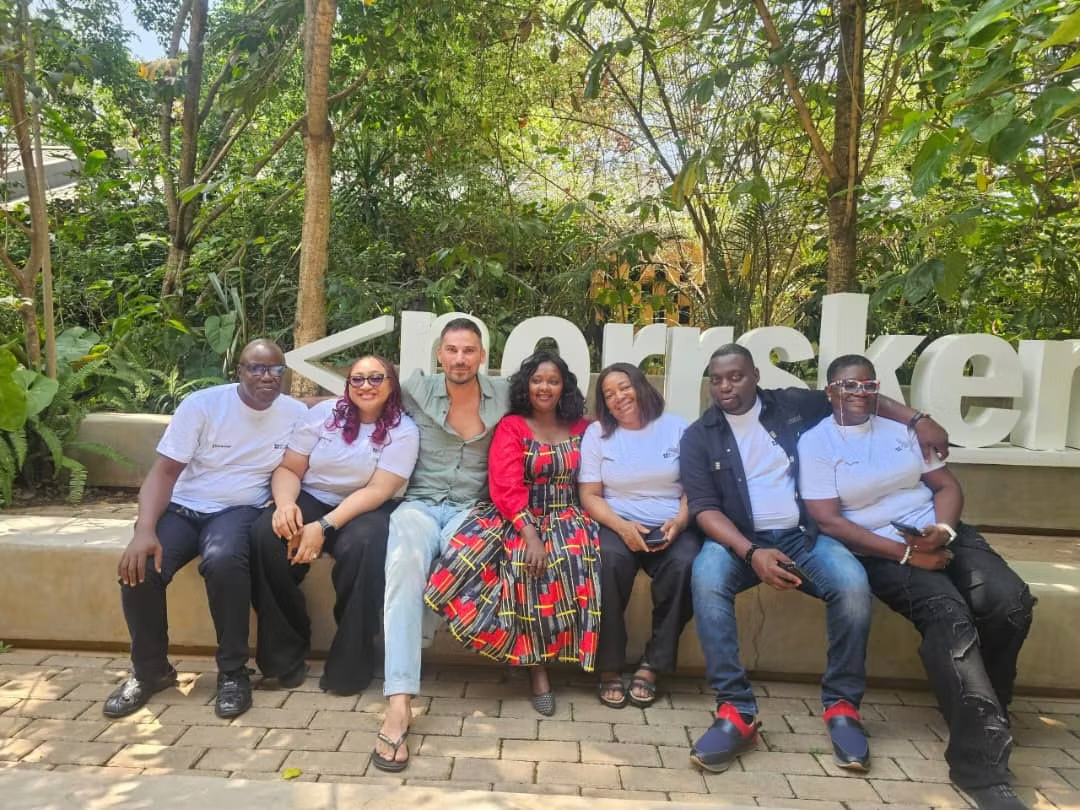
Later, the delegation attended a session on women in the publishing and creative space at Norrsken House Kigali, an innovation and entrepreneurship hub that hosted festival activities.
The contrast between the memorial and the creative gathering offered another perspective on Rwanda, drawing attention to the relationship between historical memory, rebuilding and the work of imagining a different future.
Osarenren’s principal engagement with the festival came through a poetry masterclass held during the programme’s opening period on October 1. Among those in attendance was the German ambassador to Rwanda and her entourage. According to the account of his visit, the ambassador later mentioned the poet in her speech.
During the session, Osarenren described a poet as a “moving antenna”, capturing the idea of a writer who remains alert to the emotions, contradictions, injustices, beauty and overlooked experiences of society before translating them into language.
He also offered an interpretation of the word POET, assigning a distinct creative identity to each letter: Prophet, Orphan of Thoughts, Engineer of Words and Teacher to the World.
The masterclass moved from theory to practice when Osarenren gave participants two words and asked them to write poems inspired by the prompts. More than 60 poems were produced during the exercise, according to his account.
He subsequently joined a panel discussion on the festival’s central concerns, including the relationship between intelligent technologies and human creativity.
Describing artificial intelligence as “a beautiful monster”, Osarenren acknowledged its possibilities while warning against an uncritical dependence on the technology.
He argued that the convenience offered by AI should not come at the expense of independent thought, imagination, critical reasoning and the personal experiences that inform creative expression.
For him, the central question is how technology can support the human voice without displacing the intellectual and emotional work that gives literature its distinctive character.
Osarenren also held a session dedicated to Bush Radio, his poetry collection comprising 100 poems arranged across five segments.
During the reading, he presented “Fela”, his poem dedicated to the late Afrobeat pioneer Fela Anikulapo-Kuti. Before reading, he introduced the musician to the audience through one of his memorable expressions: “Me and you no dey for the same category.”
The reference offered the audience a glimpse of Nigerian popular culture while bringing the memory and influence of a major African musical figure into the festival’s literary conversations.
Outside the official programme, the delegation explored parts of Kigali, with Gromyko Amedu playing a significant role in organising their outings and facilitating their experience of the city.
The visitors travelled to Mount Kigali, received hospitality at AfriNaija Pot and Restaurants, and explored the Green Carpet, a 2.4-kilometre running lane around the golf-course area in Nyarutarama. They also passed through the guarded Presidential Villa and observed the city’s mountainous landscape, with houses spread across its hills.
The city’s cleanliness and visible sense of order also made an impression on the Nigerian poet, adding an everyday dimension to his reflections on Rwanda’s development.
The trip brought together several strands of Osarenren’s literary interests: the dangers of ethnic division, the importance of historical memory, the capacity of art to foster dialogue and the challenges technology presents to contemporary writers.
His experience also connected with the themes of From Ashes to Ambition, the forthcoming book to which he had been invited to contribute earlier in the year. The juxtaposition of the genocide memorial and the festival’s creative activities offered a personal perspective on a country confronting the legacy of violence while building spaces for cultural and intellectual exchange.
For Osarenren, the journey ultimately reinforced his understanding of poetry as a practice of attention. Beyond the act of writing, it involves listening to people, questioning inherited assumptions, confronting difficult histories and giving language to experiences that might otherwise be forgotten.
His participation in Kigali placed Nigerian poetry within a wider African conversation about memory, identity, creativity and the future of human expression in an increasingly technology-driven world.