
…Talking drums, music, spoken word, and dance converge at Bushmead Community Hub
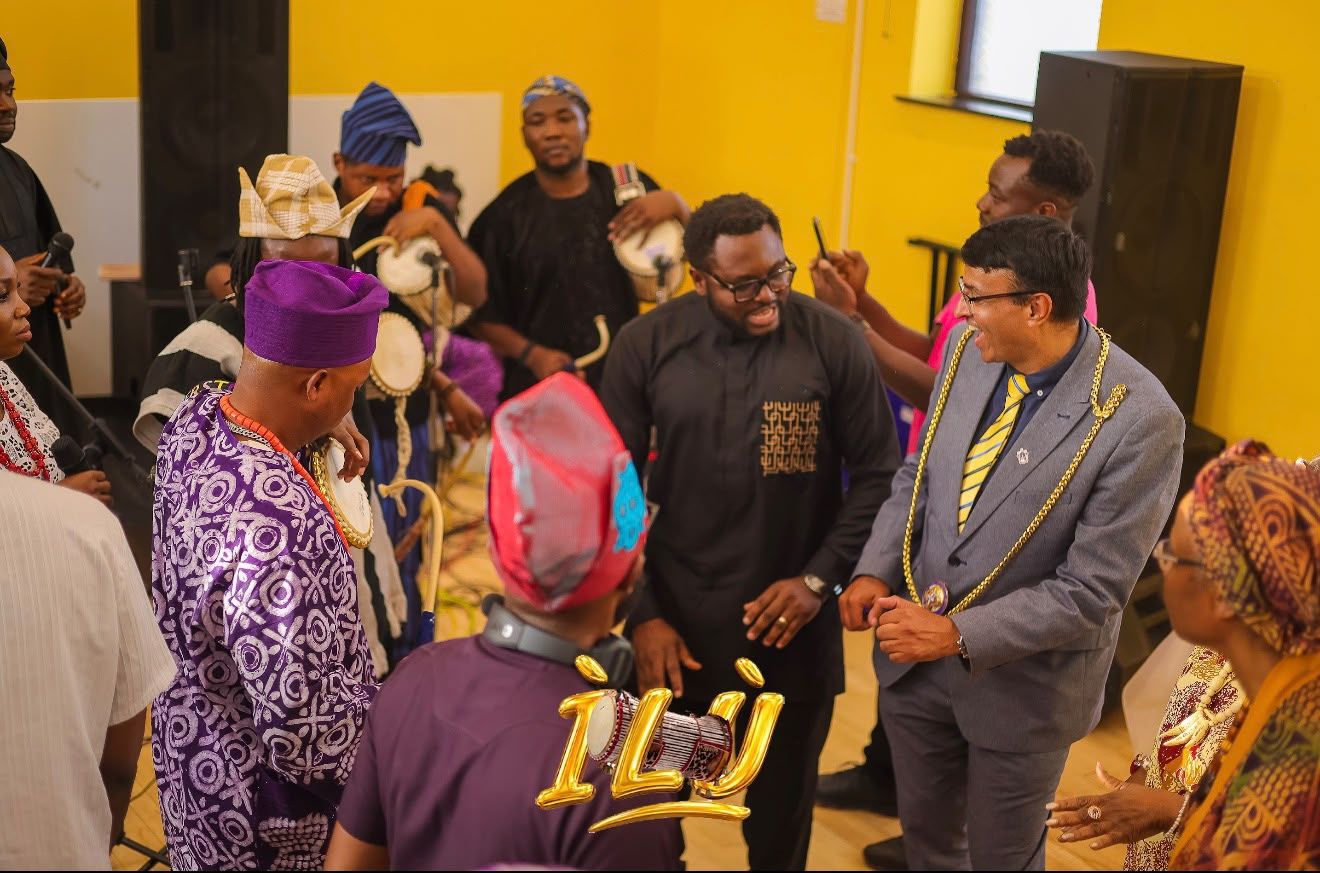
A cultural performance centred on the talking drum, poetry, music, folktales and spoken word brought together a diverse group of African and contemporary artists in Luton, as percussionist and cultural performer Olubunmi Samuel Adebisi, popularly known as IamKornerstone, convened the first edition of ÌLÙ (Drums) Festival.
The event, held on Sunday, September 6, 2026, at Bushmead Community Hub, Hancock Drive, Luton, brought together musicians, poets, spoken-word artists, dancers, comedians, photographers and other creative practitioners for a multidisciplinary celebration of African cultural expression.
Adebisi, a percussionist, cultural performer and the convener of ÌLÙ (Drums) Festival, placed the talking drum at the centre of the performance, exploring its traditional role as a means of communication alongside its possibilities within contemporary theatre and storytelling.
“For me, the drum is not just an instrument. It has a voice. It can speak to people, it can call people together and it can carry memories. With ILU, I wanted people to experience the drum as part of theatre and storytelling, not just as something accompanying a musician,” Adebisi said.
The festival brought together a broad ensemble of performers whose contributions spanned traditional and contemporary forms.
Among them was Temitope Adeoye, popularly known as Temi Commic, a performing artist whose keyboard performance introduced contemporary harmonic textures to the rhythmic framework created by the percussionists.
“I enjoy playing with percussionists because the rhythm gives you something to respond to. With Kornerstone, there is always a conversation happening. The keyboard can bring harmony, but the drum brings character,” Adeoye said.
The musical ensemble also featured Samuel Ogundapo, known as Dayo Sax, and Olalekan Agbaje, known professionally as Hurlarstringz, whose saxophone and guitar respectively added further dimensions to the performance.
The combination allowed traditional percussion to interact with contemporary instrumentation, creating a musical setting in which different approaches to African performance could coexist.
Poetry and spoken word formed an important part of the festival, extending the performance beyond instrumental music.
Adeyinka Akinremi, popularly known as Super Girl, participated as a poet and creative performer, while Agbo Irene, known as Cherryb, contributed spoken word and poetry.
Other poets and spoken-word performers included Daniel Okezue, Ehijie Ebhodaghe, known as Jeffwise, Adeoluwa Adebisi, known as MC Crown, Issifu Dee Amponsah, known as Bob Dee, and Kemisola Oladunmoye, known as Erioro.
Ebhodaghe also served as creative director, while the range of spoken-word performances gave the festival a literary dimension alongside its musical and theatrical elements.
Akinremi said the relationship between poetry and percussion allowed language to be experienced through rhythm as well as meaning.
“Poetry already has rhythm. When you put poetry beside the talking drum, you begin to hear another layer of the words. You are not only listening to what is being said. You are feeling it,” she said.
Agbo, who also performed at the festival, connected the project with the question of cultural continuity and the responsibility of artists to carry inherited traditions forward.
“What makes a performance like this meaningful is that you are not simply performing for entertainment. You are contributing to a story that existed before you and will hopefully continue after you. That gives the artist a responsibility,” she said.
The festival also featured Kemisola Oladunmoye, known as Erioro, whose contribution combined performing and poetry, while Timothy Oyindamola Fagbamila, known as Damodance, brought dance and spoken word into the programme.
Talking drummers were central to the festival’s identity, with Boluwatife Ogunsola, known as B-Stixz, and Oluwatobi Ogooluwa Alebiosu among the performing artists.
Their contributions reinforced the role of percussion as an active component of the performance rather than simply musical accompaniment.
The festival’s focus on the talking drum drew on an established African performance tradition in which rhythm can communicate, accompany movement, mark occasions and interact with spoken language.
Adebisi’s artistic direction placed that tradition within a contemporary setting in Luton, where African cultural practices exist alongside a broad range of other cultural influences.
The programme also featured Adeniyi Olusola Morolahun, known as AbuleticKing, whose participation in the event reflected the collaborative approach behind the festival.
For AbuleticKing, collaboration is integral to African musical traditions.
“African music has always been collaborative. Different instruments speak to each other. Different generations speak to each other. What we are doing is continuing that tradition in a contemporary environment,” he said.
The wider line-up reflected the scale and multidisciplinary character of the festival. It included Samuel James, known as BlvckGod Psalmie; Debola Akran; Joseph Osupala, known as Emperor; Jumoke Adeyanju; Kolade Olusanya, known as Adedayo; Adesoji Adekanle, known as Fathersojay; Ayokanmi Jeremiah Eniemola, known as Aspirekeys; Usman Ibrahim, known as Usman Sax; and Bosun Agunbiade, known as Bosun Music, all of whom contributed as performing artists or musicians.
Other contributors included Feranmi, a percussionist; Ajide Adeyemi, a performing act; Emmanuel Oluwayanmife Faremi, known as MC Yanmife, a comedian and creative act; and Olawunmi Sadare, who served as event manager.
The breadth of the artistic team suggested that Adebisi was interested in creating an environment where several artistic voices could interact, rather than presenting the festival solely as a platform for his work as a percussionist.
The festival extended beyond music and poetry to include dance, comedy, photography and other creative forms.
Oluwaseun Adeniyi, known as VHgalleria, contributed as a creative artist and photographer, documenting the event and adding a visual dimension to the programme. Timothy Oyindamola Fagbamila, known as Damodance, combined dance and spoken word, while Faremi, known as MC Yanmife, brought comedy and creative performance to the gathering.
The participation of artists from different disciplines allowed the festival to move between musical performance, spoken word, poetry, movement and comedy, while retaining the talking drum as a recurring artistic reference.
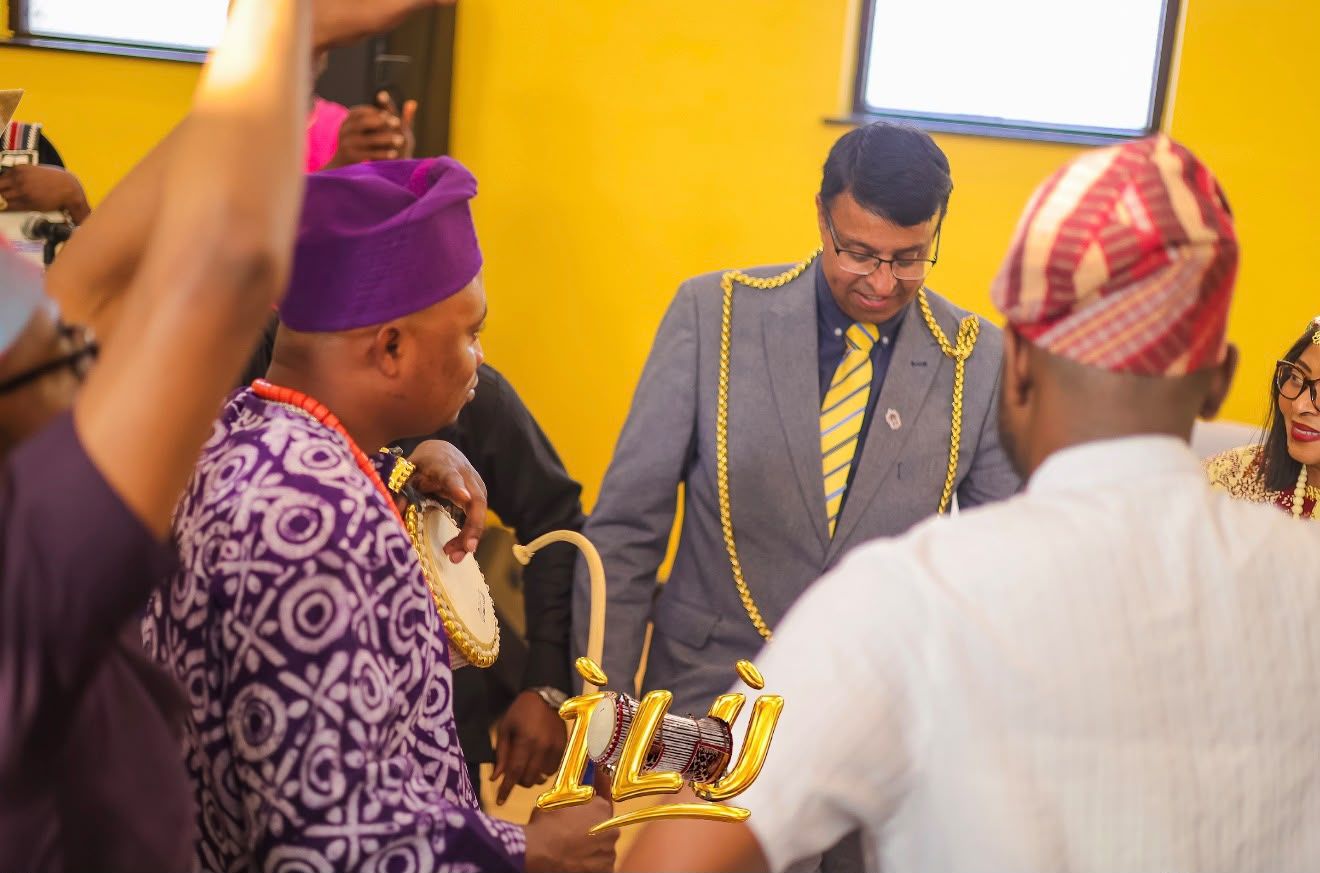
The festival also attracted members of Luton’s civic leadership.
Those in attendance included Councillor Javed Hussain, Mayor of Luton; Councillor Maria Lovell, MBE, the first Luton mayor of African heritage; Councillor Jacqui Burnett, MCMI, chair of the Bedfordshire Fire and Rescue Authority; and Councillor Babatunde Ajisola, representing Northwell ward.
Their presence placed the festival within Luton’s wider cultural and civic landscape, where communities from different backgrounds contribute to the town’s public life through cultural events and creative activities.
A draft comment attributed to Mayor Javed Hussain described the event as an example of the contribution cultural diversity makes to the town’s public space.
“Luton is proud of its diversity, and events like this demonstrate what happens when communities bring their culture into the public space. Music and the arts have a remarkable ability to bring people together,” the draft comment reads.
The organisers’ approach to the festival was rooted in the idea that cultural preservation can involve adaptation and reinterpretation.
Rather than presenting African cultural forms solely as historical artefacts, ÌLÙ placed the talking drum, poetry, folktales, proverbs and other performance traditions alongside contemporary music and spoken word. That approach gave the event a multidisciplinary character, with the various performers contributing different forms of expression to a shared programme. The talking drum remained a recurring point of connection.
For Adebisi, its significance extends beyond its musical function. Its ability to communicate, gather people and carry memories makes it relevant to a performance concerned with cultural inheritance and contemporary identity. The festival therefore brought together artists working in different forms while retaining the drum as a central reference point.
Poetry supplied language and rhythm. Music introduced melody and harmony. Percussion provided the underlying rhythmic framework, while dance, comedy, storytelling and visual documentation broadened the performance. The audience, through its response and participation, completed the exchange.
The event also demonstrated the possibilities and challenges that come with mounting a large multidisciplinary production.
With a sizeable ensemble drawn from different artistic backgrounds, maintaining a clear connection between individual performances and the festival’s central concept requires careful theatrical structuring. The breadth of the programme provides considerable creative scope, while a future edition could develop an even stronger narrative framework connecting the music, poetry, folktales and proverbs.
Such development could allow ÌLÙ to evolve from a cultural gathering into a more fully developed contemporary African theatrical production.
The foundation established by the first edition rests on several complementary elements: the talking drum as its rhythmic centre, musicians providing its sonic framework, poets and spoken-word artists supplying language, performers bringing movement and character, cultural references connecting the work to inherited traditions, and the audience completing the performance through its response.
For Adeoye, the interaction between traditional rhythm and contemporary instrumentation is part of what makes the collaboration significant.
For Adebisi, the wider ambition remains centred on changing how audiences encounter the drum.
“I wanted people to experience the drum as part of theatre and storytelling, not just as something accompanying a musician,” he said.
The first ÌLÙ Festival in Luton consequently placed the talking drum within a broader conversation about music, poetry, memory and contemporary African performance.
Held on September 6, the event presented the drum as a source of rhythm and communication, while giving a large group of artists an opportunity to explore how inherited cultural forms can continue to find expression in a contemporary British setting.


