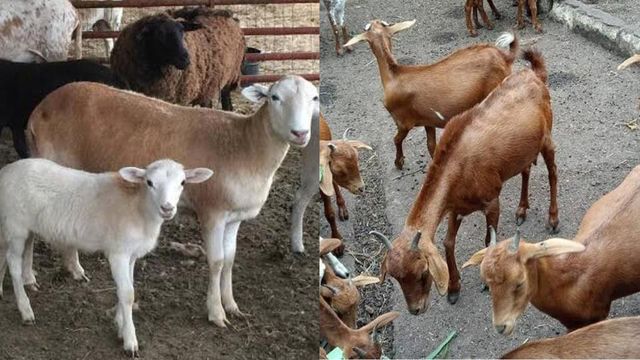
The Federal Ministry of Livestock Development has commenced the training of over 60 veterinarians to eradicate Peste des Petits Ruminants (PPR), a deadly viral disease in sheep and goats, by 2030.
The ministry also said it was committed to eradicating the disease to secure livelihoods, boost revenue and ensure food security in the country.
Dr. Samuel Anzaku, Chief Veterinary Officer of Nigeria, stated this on Monday at the opening ceremony of the two-day Pre-Field Training Workshop for the National PPR Sero-Surveillance and Transboundary Animal Diseases (TADs) Sero-Monitoring exercise in Akwanga, Nasarawa State.
News menreports that Peste des Petits Ruminants (PPR), also called sheep and goat plague, is a severe and highly contagious viral disease affecting domestic and wild small ruminants.
News men also reports that the workshop was organised by the Federal Ministry of Livestock Development in collaboration with the African Union Inter-African Bureau for Animal Resources (AU-IBAR).
Anzaku said the pre-training workshop for the PPR sero-surveillance field activity was designed to train data collectors on standardised field protocols, sample collection, digital data capture, biosafety and field logistics.
He said that during the workshop, participants would be familiarised with field methodology, animal selection and sampling procedures, sample handling and identification, data collection tools and documentation requirements and other operational procedures.
“Equally important, we will use this opportunity to ensure that teams operating in different states apply the same standards.
“The implementation schedule for the field exercise will also be determined during this workshop, taking into account the operational realities and readiness of the participating teams and states,” he said.
The chief veterinary officer said the workshop was an important milestone in Nigeria’s efforts to strengthen animal health surveillance and accelerate progress towards the global goal of PPR eradication by 2030.
“Nigeria has recently completed the update and validation of its National Strategic Plan for PPR control and eradication, taking into consideration current realities and the need to intensify our efforts towards the 2030 target,” he said.
“This was further complemented by the recent AU-IBAR Monitoring and Evaluation mission, which provides an opportunity to examine the gains made, identify remaining gaps and determine where greater attention and investment are required,” he added.
Anzaku noted that disease surveillance without adequate laboratory confirmation limits the ability to identify hotspots, determine the extent of disease circulation, understand population immunity and make evidence-based decisions on interventions.
“One of the issues that continues to concern us is the limited availability of laboratory-confirmed evidence to support the epidemiological information being generated from the field.
“For PPR, available records indicate that only four outbreaks were laboratory-confirmed by National Veterinary Research Institute (NVRI) between January and June this year, compared with 565 suspected PPR outbreaks reported through field surveillance during the same period.
“This substantial difference highlights the gap between disease events identified at field level and those supported by laboratory confirmation, underscoring the need to strengthen laboratory-based surveillance and diagnostic confirmation for PPR in Nigeria,” he revealed.
He said that for Newcastle Disease (NCD), laboratory records indicated that two outbreak samples were submitted between January and June, of which one was confirmed positive, while 504 NCD outbreaks were suspected through field surveillance during the same period.
“If Nigeria is to make meaningful progress towards eradication by 2030, we cannot rely solely on historical information, clinical suspicion or routine passive reporting.
“We need current, geographically representative and scientifically defensible evidence on where PPR is circulating, where susceptible populations are concentrated and what level of immunity exists within sheep and goat populations,” he said.
The chief veterinary officer urged all participants to take the training seriously, stressing that the quality of the final results would depend on the quality of work carried out in the field.
“A poorly selected sample, an incorrectly completed form, an improperly identified specimen or a breakdown in the chain of custody can compromise an otherwise well-designed surveillance exercise.
“The information generated must ultimately translate into better decisions, better targeting of vaccination, better identification of high-risk areas, stronger disease reporting, improved laboratory-field linkages and more effective deployment of scarce animal health resources,” he noted.
Anzaku encouraged the field teams to maintain professionalism, accuracy and integrity throughout the exercise.
He appreciated the Federal Ministry of Livestock Development and AU-IBAR for sponsoring the workshop and subsequent field activities.
“I also acknowledge the contributions of NVRI, State Veterinary Services, the academia, our private veterinary colleagues and all other partners whose participation will be essential to the success of this exercise,” he said.
Anzaku congratulated Gov. Abdullahi Sule of Nasarawa State for the establishment of the State Ministry of Livestock Development.
“This is a significant and commendable development which fully aligns with the ‘Renewed Hope’ agenda of His Excellency, President Bola Ahmed Tinubu, and the federal government’s recognition of livestock as a critical component of Nigeria’s economic transformation, food security and employment generation agenda,” he said.
He assured the federal ministry of livestock development’s continued collaboration with the Nasarawa state government and its relevant institutions in advancing livestock development and strengthening disease surveillance, control and productivity in the sector.
Earlier, Dr. Abdullahi Musa, Director, Veterinary Services, Ministry of Agriculture, Nasarawa State, disclosed that the state was about to establish a Ministry of Livestock to boost livestock production and food security.
He called for collective efforts to eradicate the disease in the country.
In their goodwill messages, Mr. Charles Lodiaga of the African Union Inter-African Bureau for Animal Resources, Dr. Mukhtar Sabuwa, Chairman, Nigeria Veterinary Medical Association, Nasarawa State Chapter, and Dr. Abubakar Aminu of the National Association of Animal Health and Husbandry Technologists, appreciated the ministry and AU-IBAR for organising the workshop.
They assured of their commitment to providing reliable and accurate data to support the eradication of PPR and improve livelihoods and food security in the country.
NAN reports that the workshop had in attendance representatives from the National Veterinary Research Institute (NVRI), Veterinary Teaching Hospitals, Nigeria Veterinary Medical Association (NVMA), National Association of Animal Health and Husbandry Technologists (NAAHHT), private veterinary practitioners and staff of federal and state ministries of livestock development, among others.