
By Omobolaji Adekunle
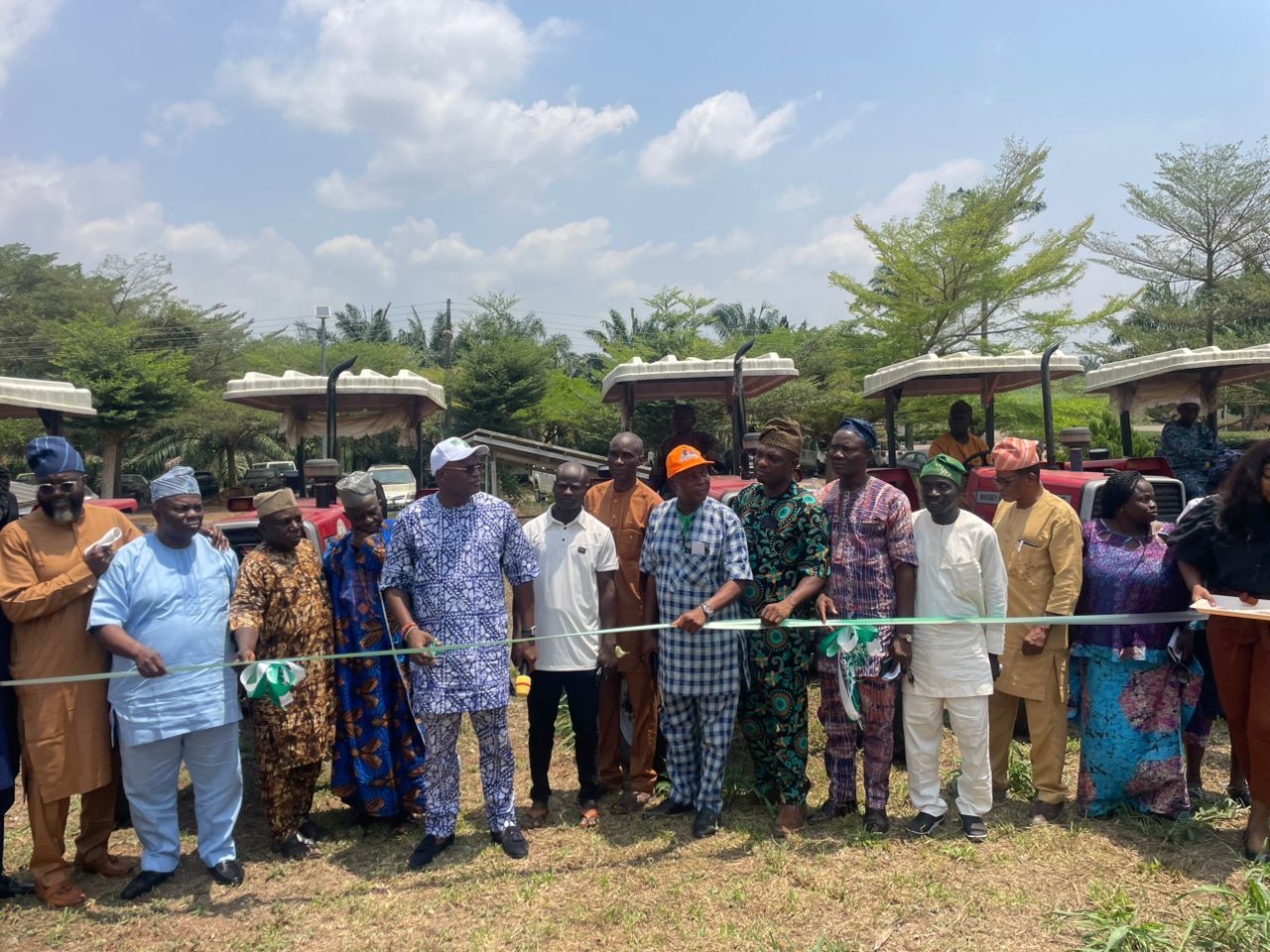
The Ogun-Oshun River Basin Development Authority (OORBDA) has officially launched its 2025/2026 dry season farming campaign, marked by the strategic deployment of tractors and modern implements to farm settlements across South-West Nigeria.
During a ceremony held Thursday at the OORBDA Conference Hall in Abeokuta, Managing Director and Chief Executive Officer Adedeji Ashiru emphasized that the initiative is designed to bolster food production, strengthen regional food security, and empower local farmers through increased mechanization.
Ashiru noted that the program directly aligns with President Bola Ahmed Tinubu’s “Renewed Hope Agenda,” which prioritizes agricultural productivity as a pillar of national stability.
According to the Managing Director, the deployment is a core component of a broader strategy to expand irrigated agriculture. By providing modern machinery, the authority aims to transition more farmers toward year-round cultivation, reducing the traditional reliance on seasonal rainfall.
Ashiru highlighted that this intervention is particularly timely, as rising food prices continue to strain Nigerian households, necessitating practical, state-led responses to support the agricultural value chain.
OORBDA’s statutory mandate covers land and water resource development across Ogun, Oyo, Osun, and Lagos States. The authority oversees critical infrastructure, including the Ikere Gorge and Oyan Dams, which serve as the backbone for irrigation and water supply in the region.
The first phase of the tractor deployment will benefit eleven OORBDA farm settlements. These include Sepeteri, the Middle Ogun Irrigation Project in Iseyin, Ofiki, and Asa in Oyo State; Iwo and Okuku/Iba in Osun State; and Oke-Odan, Igan-Alade/Ijaka, Owiwi, and Eyinwa in Ogun State. The Itoikin Farm Settlement in Lagos State is also slated as a primary beneficiary.
Ashiru explained that dry season farming serves as a critical strategy for food price stabilization.
The provision of tractors allows farmers to prepare larger tracts of land more efficiently, significantly reducing manual labor while increasing overall crop yields. For this cycle, the authority is targeting the cultivation of staples such as maize and cassava, alongside high-demand vegetables, tomatoes, and peppers.
To ensure the success of these crops, OORBDA officials will provide ongoing agronomic support, focusing on land preparation, fertilizer application, and pest management.
Supporting this vision, the Executive Director for Agricultural Services, Sulaimon Akeem Omoyele, described the move as a major leap toward sustainable farming.
He noted that OORBDA currently manages over 40 farmer-based project sites utilizing diverse irrigation methods, including sprinkler, central pivot, and flooding systems. These facilities support a wide variety of produce, ranging from watermelons and cucumbers to okra and cassava.
Omoyele commended the Managing Director for facilitating the equipment rollout and assured stakeholders that the machinery would be strictly maintained to maximize both food output and revenue generation for the authority.
Officials remain optimistic that this intensified focus on the dry season will improve rural livelihoods and contribute a significant volume of produce to the national food basket.


