The Nigerian Content Development and Monitoring Board (NCDMB) has confirmed that the three Executive Orders issued by President Bola Ahmed Tinubu on the oil and gas industry in March 2024 did not weaken or negate the Nigerian Oil and Gas Industry Content Development (NOGICD) Act.
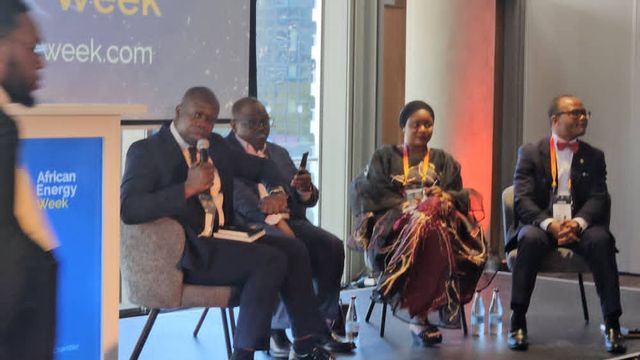
This was contained in a statement signed by Dr. Obinna Ezeobi, General Manager, Corporate Communications, NCDMB, during the Local Content Masterclass and panel discussion held on Monday at African Energy Week in Cape Town, South Africa.
The statement reads partly: “The Special Adviser to the President on Energy had to clarify that the Presidential Directives did not set aside local content. They only mandated that existing capacities must be patronized and middlemen must be excluded from the contracting process.
“Qualified international service companies can now be awarded the Nigerian Content Equipment Certificates (NCEC), to facilitate their direct participation in deepwater operations in the Nigerian oil and gas industry, as provided in the NOGICD Act. This policy will attract investments into the sector, and is consistent with the Presidential Directives.
“Local content and capacity building strategies must be country-specific, and policy makers must understand the mindset and skillsets of their nationals. Local content policies and capacity building models must be relevant and applicable to the host country’s technological, educational and manpower capacities.”
“The Board is also committed to developing critical infrastructure such as the Brass Island Shipyard with support of the NLNG, as well as completing and operationalizing the Nigerian Oil and Gas Parks at Odukpani, Cross River State and Emeyal-1 in Bayelsa State.”
According to NCDMB, the directives, which include the Presidential Directive on Local Content Compliance, the Presidential Directive on Reduction of Petroleum Sector Contracting Cost and Timelines, and the Presidential Directive on Oil and Gas Companies’ tax incentives, were widely misinterpreted by stakeholders as sidelining the NOGICD Act.
Engr. Abayomi Bamidele, Director of Capacity Building at NCDMB, clarified that the Board had streamlined its contracting process from nine touchpoints to five to accelerate project execution and reduce costs while ensuring compliance with the law.
Mr. Silas Omomehin Ajimijaye, General Manager, Monitoring and Evaluation, stressed that divestments of oil and gas assets to indigenous operators have not negatively affected Nigerian content compliance, noting that the Board maintains strict monitoring protocols and provides guidance to successor companies.
He also emojasised the importance of research and development, revealing that NCDMB has established six centres of excellence in universities across the country and supported 15 commercialisable research projects through its R&D Fund.
Ms. Fateemah Mohammed, General Manager of the Nigerian Content Development Fund (NCDF), explained that the Board’s financing schemes, including a N50bn Community Contractors Fund and a US$20m Women in Oil and Gas Intervention Fund, provide single-digit financing to boost local service companies and promote women’s participation in the sector. She called on other African nations to adopt similar funding models to stimulate local capacity development.
The NCDMB emphasised that local content remains central to Nigeria’s oil and gas growth strategy and that adherence to the NOGICD Act is mandatory for all operators, even under the Presidential Directives.