
By Fredrick Ameh
Nigeria is currently battling a “national hemorrhage” that extends far beyond simple theft. Recent data from the National Upstream Petroleum Regulatory Commission (NUPRC) reveals a staggering loss: as of early 2026, the nation has lost over ₦8.41 trillion to oil theft and pipeline breaches within a four-year window.
To put the scale of this crisis into perspective, these losses are eight times the entire 2025 national budget for road projects and triple the annual education budget. This financial drain is directly threatening the stability of the national currency and the success of the “Renewed Hope” fiscal agenda.
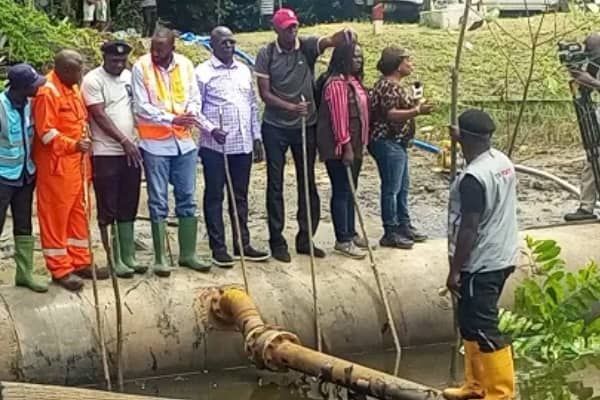
The damage caused by vandals is not limited to stolen crude; it creates a systemic failure across the energy network. When a pipeline is breached, the resulting pressure drop forces major terminals, like the Bonny Crude Oil Terminal, to operate at significantly reduced capacities.
The environmental cost is equally catastrophic. The “black soot” phenomenon plaguing cities like Port Harcourt is a direct byproduct of illegal “artisanal” refining. Beyond the air quality crisis, oil leaks saturate silt and clay soils, leading to toxic run-offs that have decimated farmland and fishing grounds, effectively destroying local livelihoods for generations.
Experts argue that the private sector cannot solve this crisis alone because it has evolved into a sophisticated form of organized crime. To combat this, the government is deploying a “good hand” strategy built on three essential pillars:
Technological Sovereignty: The government has begun deploying Digital Twins and IoT (Internet of Things) sensors. These tools allow for real-time monitoring of pipeline integrity, moving the state from reactive policing to proactive, tech-driven prevention.
Executive Mandates: Through Executive Order 9 (2026), the administration is streamlining how petroleum revenue is protected and remitted, ensuring the “shadow economy” of illegal refining does not outpace legal production.
The Community Social Contract: Shifting away from purely military solutions, the state is investing in host communities. By establishing institutions like the Federal University of Environment and Technology in Ogoniland, the government is giving locals a direct stake in the survival of the infrastructure.
The bottom line remains clear: securing these lines is a race against time. Currently, production losses fluctuate between 9,600 and 10,000 barrels per day. Failure to secure these corridors by the end of 2027 could lead to a collapse of investor confidence.
However, recent resolutions passed in April 2026 show promise. The government has reaffirmed its goal of sustaining an output of 1.8 million+ bpd through 2027 while rejecting the decentralization of surveillance contracts to prevent security fragmentation.


