By Olakunle Oke
The Major Energy Marketers Association of Nigeria (MEMAN) has said that the removal of fuel subsidy has ushered in full deregulation of Nigeria’s downstream sector, creating new opportunities for innovation, investment, and digital transformation.
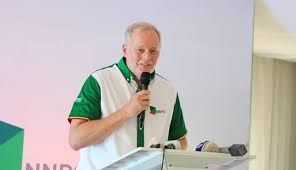
Chairman of MEMAN, Mr. Huub Stokman, stated this during a panel session titled “Navigating the New Frontier: Competition and Market Access in the Downstream Oil & Gas Industry” at the OTL Africa Downstream Week 2025.
Stokman explained that the policy shift is driving the adoption of new business models such as Energy-as-a-Service, Virtual Power Plants, and peer-to-peer energy trading, aimed at boosting efficiency and expanding access to energy.
“The downstream environment is evolving rapidly. With the Dangote Refinery coming onstream, dependence on imported products is falling, reshaping local supply,” he said.
He added that the removal of subsidies has redefined Nigeria’s downstream market, allowing private players to compete, innovate, and invest across the energy value chain.
Stokman also highlighted that natural gas is increasingly seen by policymakers as a cleaner transition fuel, with rising demand for Compressed Natural Gas (CNG) and Liquefied Natural Gas (LNG) across sectors.
He noted that the industry is increasingly embracing sustainable and digital technologies such as solar energy, biofuels, and advanced monitoring systems to enhance operational efficiency and support the nation’s energy transition goals.
However, he emphasised that regulatory clarity and policy stability are crucial for sustaining investor confidence and ensuring long-term sectoral growth.
“Significant investment is still required in refining, storage, distribution, and low-carbon infrastructure to meet Nigeria’s energy transition targets,” he stated.
Stokman described Africa’s energy landscape as a “dual reality”, where the continent must simultaneously address energy poverty and adapt to the global shift toward cleaner energy sources.
He noted that natural gas in the form of LNG, LPG, or CNG remains vital for Africa’s industrialisation and energy access, while decentralisation and digitalisation are reshaping how energy is generated and distributed.
“The biggest frontier remains the 600 million Africans without energy access. This is a vast opportunity for decentralised renewable energy solutions,” he said.
To ensure a sustainable energy future, Stokman called for regional integration through cross-border gas pipelines and harmonised regulations within ECOWAS and SADC.
He urged African nations to diversify investments beyond oil and gas into areas such as Battery Energy Storage Systems (BESS), LPG bottling, and CNG compression facilities.
Stokman further encouraged downstream firms to adopt pay-as-you-go models, local micro-depots, and data-driven technologies to reduce costs and enhance efficiency.
He also called for cross-border partnerships and collaborations between downstream operators, financiers, and technology companies to accelerate sectoral growth.
“The focus must be on green hydrogen, decentralised solar, and energy storage solutions that deliver customer value while ensuring environmental sustainability,” he added.