
By Precious Mark
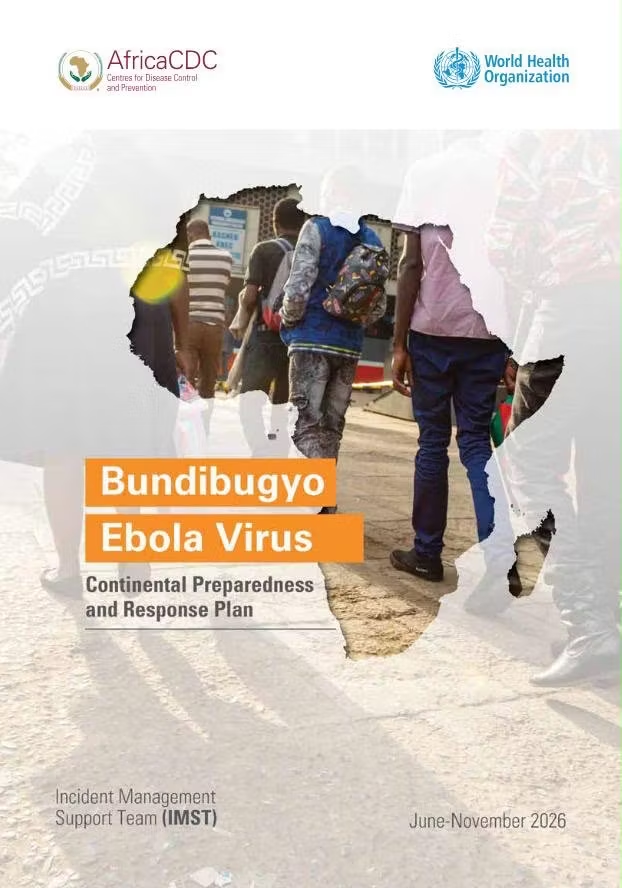
The Africa Centres for Disease Control and Prevention (Africa CDC) and the World Health Organization (WHO) have unveiled a joint continental response plan aimed at containing the ongoing Ebola outbreak and preventing its spread across Africa.
The six-month plan, which will run from June to November 2026, seeks to mobilise $518 million to support African countries in preparing for, detecting and responding rapidly to the outbreak caused by the Bundibugyo strain of the Ebola virus.
The initiative brings together governments, health agencies, development partners and communities under a unified “One Response” framework designed to strengthen emergency coordination, disease surveillance, laboratory testing, infection prevention and control, clinical care, community engagement, research and logistics.
The continental plan complements existing national response strategies launched by the governments of the Democratic Republic of the Congo and Uganda, the two countries currently battling the outbreak.
Speaking at the launch on Friday, Jean Kaseya, Director-General of Africa CDC, stressed the urgency of a coordinated continental response.
“Ebola moves fast. Africa must move faster,” Kaseya said, noting that the plan provides a clear roadmap for countries to act quickly and collectively to save lives, support affected nations and protect neighbouring communities.
He added that Africa CDC, working with member states, WHO and other partners, is converting commitments into practical action and resources for communities most at risk.
Tedros Adhanom Ghebreyesus, WHO Director-General, said the success of the response would depend on strong collaboration among governments, health workers, communities and development partners.
According to him, the outbreak can only be defeated through a coordinated effort guided by “one plan, one budget and one team.” He also stressed that political commitment, sustained funding and public trust are essential to stopping transmission.
Tedros noted that community participation remains critical to the response, warning that contact tracing, early treatment and other control measures become ineffective when communities are not fully engaged
The plan places special emphasis on protecting vulnerable populations, strengthening cross-border surveillance and helping countries respond quickly to new infections.
It also aims to improve health system resilience at a time when there are no licensed vaccines or approved treatments specifically designed for the Bundibugyo strain responsible for the current outbreak.
Africa CDC and WHO said preparedness and response activities are already underway in affected and at-risk countries, with enhanced public health measures being implemented in 10 priority countries considered vulnerable to potential spread of the virus.
The organisations further stressed the need to sustain responses to other ongoing health emergencies, including mpox, cholera and measles, to avoid disruptions that could weaken health systems across the continent.
The joint appeal comes as response operations intensify in the Democratic Republic of the Congo, where health authorities, supported by Africa CDC, WHO and partners, are working to contain what officials describe as one of the most serious outbreaks of the Bundibugyo strain recorded to date.
Africa CDC and WHO urged African countries to strengthen screening at airports and border crossings, enhance cross-border collaboration and maintain solidarity in order to prevent further spread of the disease.


