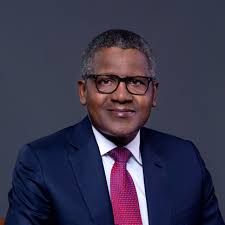
As Iranian attacks force the de-facto closure of the Strait of Hormuz and send shockwaves through global energy and agricultural markets, Africa’s richest man is positioning his sprawling industrial empire as the continent’s ultimate shield.
In a recent interview with The Economist at his Lagos headquarters, Aliko Dangote painted a stark picture of the current geopolitical fallout, noting that crude oil prices had surged by 10 percent in a matter of hours following the latest news from the Gulf.
Describing the global supply chain disruption as a crazy situation, the billionaire industrialist warned that the crisis and its resultant market volatility will likely continue for the foreseeable future.
However, the chaos in the Middle East is rapidly transforming Dangote’s $20 billion, 650,000-barrel-per-day refinery complex from a Nigerian economic milestone into an indispensable global asset.
With traditional petroleum supply lines from the Gulf severely constricted, Dangote revealed that his phone is ringing constantly with offers from desperate buyers.
According to the tycoon, the sheer panic in the market has created a scenario where international buyers are now ready to pay virtually anything to secure product availability.
Beyond refined petroleum, the Gulf crisis has exposed a massive vulnerability in global agriculture that Dangote’s complex is uniquely equipped to address.
The blocked Strait of Hormuz typically facilitates one-third of the world’s seaborne fertilizer trade. As those shipments grind to a halt, the massive fertilizer plant located within Dangote’s refinery complex, capable of producing 3 million metric tons annually, has suddenly become a critical lifeline for food security. Powered by gas from the refinery and feeding directly into a bespoke export port, the facility is stepping in to fill the massive void left by the paralyzed Middle Eastern trade routes.
For the 68-year-old billionaire, whose net worth is estimated at $28.5 billion, the current crisis validates a long-held, aggressive strategy of African self-reliance.
He argued forcefully that the continent can no longer afford to depend on foreign imports that are easily severed by distant wars.
Drawing parallels to the domestic-led industrial booms of Asia and comparing his trajectory to that of India’s Mukesh Ambani, Dangote insisted that African businessmen must drive the continent’s industrialization.
Yet, he remains highly skeptical that other African nations or tycoons will replicate his massive infrastructural gambles.
Acknowledging the monumental capital and logistical hurdles involved in building his industrial complex which required dredging a swamp and constructing a private seaport, he noted that many African investors simply lack the capital or the risk appetite for such ventures.
Instead, Dangote is doubling down on his own pan-African expansion. Leveraging the massive balance sheet of his cement business, the Dangote Group is rapidly advancing plans to insulate the continent from future global shocks. These include a $2.5 billion joint venture for a fertilizer plant in Ethiopia, heavy investments in Zimbabwe’s power and cement sectors, copper processing in Zambia, and an ambitious petroleum pipeline stretching from Namibia to central Africa.
As global markets scramble to adapt to the reality of a closed Strait of Hormuz, Dangote remains focused on aggressive growth, promising that his already colossal operations will triple in size over the next three years. For now, his industrial Xanadu stands as one of the few buffers protecting African economies from the full brunt of the Middle Eastern conflict.
Middle east crisis: African nations turn to Dangote Refinery as conflict chokes global fuel supply
As the escalating war involving the US, Israel, and Iran severely disrupts global petroleum supply chains, African nations are racing to secure alternative energy sources.
At the forefront of this scramble, South Africa is actively pursuing a 12-month fuel supply contract with Aliko Dangote’s mega-refinery in Lagos, Nigeria.
They are not alone in this strategic pivot as governments across the continent, prominently including Ghana and Kenya, have also initiated official contact with the $20 billion facility, seeking reliable regional alternatives as traditional Middle Eastern supplies dry up.
The sudden shift in energy procurement stems from intense pressure on the Strait of Hormuz, a crucial maritime chokepoint that facilitates nearly a fifth of the world’s oil trade.
Following Iran’s blockade of the strait on February 28, Gulf refineries that traditionally supply the bulk of Africa’s finished petroleum products have been placed under immense strain. This geopolitical bottleneck has been particularly devastating for eastern and southern African nations, which historically rely on the Middle East for approximately 75 percent of their refined fuel imports, according to the energy consultancy CITAC.
The ripple effect of this conflict has already sent global crude prices surging well above the $100 per barrel mark.
Aliko Dangote recently emphasized the gravity of the situation, noting that the current market dynamics are driven entirely by product availability rather than pricing, a reality he expects to persist for the foreseeable future.
However, while his 650,000-barrel-per-day facility is one of the largest on the planet, its capacity to absorb the continent’s newly redirected demand is structurally limited.
Currently, about 75 percent of the plant’s production is dedicated to meeting Nigeria’s domestic needs—a massive shift that now supplies roughly 92 percent of the country’s petrol demand and has drastically reduced its own reliance on fuel imports.
Consequently, the remaining export window is relatively narrow, leading analysts to caution that the refinery cannot single-handedly bridge the massive fuel deficit now facing the rest of the continent.
Despite these capacity limitations, governments are moving swiftly to mitigate potential economic crises. A spokesperson for the South African government confirmed their active coordination with industry stakeholders to secure both crude and refined products from a more diverse range of sources.
Both South African and Kenyan authorities have reassured their citizens that they currently possess adequate fuel reserves for the immediate future, staving off imminent threats of shortages. Nevertheless, the lack of deep strategic reserves remains a looming vulnerability, especially given that no African nation belongs to the International Energy Agency, which mandates that its members hold at least 90 days’ worth of net oil import reserves.
Ultimately, this widespread scramble for Dangote’s refined output underscores a deep-seated structural vulnerability across the continent. Years of chronic underinvestment have decimated Africa’s local refining capacities, leaving once-functional facilities to deteriorate or shut down entirely. As the global oil market recalibrates in the wake of the Middle East conflict, the rapid pivot by nations like South Africa, Ghana, and Kenya signals a significant turning point. African governments are increasingly being forced to view regional supply chains and intra-continental trade not merely as a convenient fallback option, but as a vital strategic asset for long-term energy security.