Latest in
In a recent warning that has sent ripples across the nation, the Federal Competition and Consumer Protection Commission (FCCPC) has raised alarm over the dangers of low-quality sugar flooding Nigeria’s markets. According to the commission, this imported substandard sugar is not only a threat to public health but also to the sustainability of local industries ...
The recurrent collapse of Nigeria’s national electricity grid underscores the critical challenges within the country’s power sector. Despite repeated efforts to address the issue, a permanent solution remains elusive. The problem lies not just in the failure to restore power after each collapse, but in the deeper, systemic issues that continue to undermine the effectiveness ...
In a country reeling from a series of pressing challenges, from economic instability to rising insecurity, the recent announcement that First Lady Oluremi Tinubu and National Security Adviser Nuhu Ribadu will lead national prayers is both a powerful and poignant gesture. Organised in collaboration with leaders from both the Christian and Muslim communities, this week-long ...
Eleven times this year, Nigeria’s national power grid has failed, plunging the country into darkness yet again, with no clear end in sight. This is not just a series of technical hiccups; it is a glaring failure of a broken energy infrastructure that cries out for urgent reform. It is clear that the time for ...
Since the closure of the Federal Capital Territory (FCT) $500 million Closed Circuit Television (CCTV) project, awarded during the administration of former President Goodluck Jonathan, little has been heard about the fate of the ambitious initiative. The project, designed to enhance security and public safety in the nation’s capital, was aimed at curbing the rising ...
Donald Trump’s victory in the 2024 U.S. Presidential Election offers important lessons for democracies around the world, including Nigeria. While the political contexts of both countries differ, the principles that sustain any democracy—such as the role of institutions, electoral integrity, and public trust—remain universally relevant. Trump’s second term will provide critical insights into the challenges ...
In the fast-evolving global landscape, the notion of age as a barrier to higher education is quickly becoming outdated. Nigeria, with its youthful and dynamic population, stands at a crossroads where the potential of its young people is still largely untapped. The recent reversal of the 18-year age limit for university admission signals an important ...
This past Tuesday, Nigerians awoke to another alarming rise in petrol prices, with the Nigerian National Petroleum Corporation (NNPC) announcing that pump prices have surged to N1,060 per litre in the Federal Capital Territory and N1,025 in Lagos. This marks the second increase in just three weeks, raising concerns about the impact on everyday life ...
The recent report from the International Monetary Fund (IMF) highlights a troubling reality in Nigeria’s economic situation. Despite rising debt costs, Nigeria continues to borrow heavily, raising concerns about its financial stability. The IMF warns that without significant changes, the country may soon reach a critical tipping point. During a press conference at the IMF/World ...
The recent case involving Hon. Alex Mascot Ikwechegh, a member of the House of Representatives, highlights a troubling intersection of power and accountability in Nigeria. Charged with assaulting a Bolt driver at his residence, the lawmaker has entered a plea of not guilty to allegations that include abuse of office and threats to life. While ...
The recent unveiling of made-in-Nigeria laptops and tablets by the National Agency for Science and Engineering Infrastructure (NASENI) serves as a powerful rebuttal against the widespread poverty plaguing the nation. In partnership with Imose Technologies Ltd, this initiative underscores Nigeria’s potential to harness its local resources and talent to create solutions that directly address economic ...
The World Bank’s recent endorsement of Nigeria’s economic reforms raises pressing questions about its priorities and the impact on the Nigerian populace. Over the past five years, Nigeria has borrowed more than $24 billion from the global lender, with the Bola Tinubu administration alone accruing $6.45 billion in just 16 months. This borrowing spree coincided ...
As Nigeria grapples with escalating security challenges, the necessity for a robust, domestically produced satellite infrastructure has become increasingly critical. Last week’s forum convened by the Nigerian Communication Satellite Limited (NIGCOMSAT) in Abuja emphasised this urgency. It brought together key stakeholders from the Ministry of Communications, the Ministry of Defence, and the private sector, all ...
Since the suspension of the Nigeria Air joint venture with Ethiopian Airlines in May 2023, little has been communicated about this ambitious project. Former Minister of Aviation Hadi Sirika announced the suspension shortly before leaving office, and Festus Keyamo confirmed this decision, noting that a court of competent jurisdiction voided the joint venture agreement. Reports ...
As the world grapples with the urgent need to combat climate change, a glaring hypocrisy has emerged in the expectations placed on Africa. Despite being the least emitter of carbon emissions, African nations are increasingly urged to take the lead in global climate action. This demand becomes especially disconcerting when viewed against the backdrop of ...
The recent decision by the Nigerian Senate to establish an investigative panel in response to allegations against Deputy Senate Leader Oyelola Yisa Ashiru highlights a critical juncture in the nation’s political landscape. The accusations levelled by the National Drug Law Enforcement Agency (NDLEA)—that Ashiru is involved in drug trafficking—are severe and require thorough examination. Yet, ...
The recent collapse of Nigeria’s power grid for the third time in just one week is a stark reminder of the ongoing energy crisis that has plagued the nation. Following similar blackouts last week, this latest incident marks the eighth failure of the national grid in 2024 alone, adding to a staggering total of 46 ...
The United Nations’ Sustainable Development Goal to eradicate poverty by 2030 appears increasingly unattainable, especially in light of the World Bank’s recent report. Despite concerted global efforts, nearly 700 million people are still living on less than $2.15 per day. Projections for 2030 indicate that around 7.3 percent of the world’s population may continue to ...
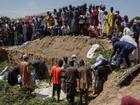
The recent petrol tanker explosion in Majiya Town, Jigawa State, is a heart-wrenching reminder of the precariousness of life and the urgent need for enhanced safety measures in our transportation systems. The loss of 140 lives, with nearly 90 others critically injured, marks one of the most devastating incidents in recent memory, leaving families shattered ...
World Food Day (WFD), celebrated on October 16th, was established by the Food and Agricultural Organisation (FAO) in 1979, coinciding with its founding on the same date in 1946. The day aims to raise awareness about the global fight against hunger. Over 150 countries observe World Food Day annually, and the 2024 theme is “Right ...
As Nigeria navigates a challenging economic landscape under President Ahmed Bola Tinubu’s Renewed Hope administration, an important question arises: does the Nigerian Economic Summit truly benefit the everyday citizen? This annual gathering of policymakers, business leaders, and civil society aims to forge strategies for economic growth and development. However, the tangible impact of these discussions ...
The tragic capsizing of a boat on the Niger River on Independence Day, which left no fewer than 150 passengers feared dead, is a reminder of the urgent need for improved safety measures in our waterways. The incident, occurring in Gwajibo village while the boat was en route to a Maulid Nabbiy celebration, highlights the ...
There is an alarming urgency regarding the future of Nigeria’s public university system. Recent statements from President of the Academic Staff Union of Universities (ASUU), Emmanuel Osodeke, during the ASUU State of the Nation conference in Abuja, underscore this reality. Academics from both local and international institutions gathered to discuss pressing issues, and Osodeke’s warnings ...
Nigerians have long lost count of the promises made by the Federal Government and its petroleum managers, particularly the Nigerian National Petroleum Company Limited (NNPCL), regarding the restart of the Port Harcourt Refinery and the other refineries in the country. The turnaround maintenance project, which began in 2021, has cost an astonishing $1.5 billion and ...
In a rapidly evolving digital landscape, the role of government in fostering innovation cannot be overstated. Dr. BosunTijani, Nigeria’s Minister of Communications, Innovation, and Digital Economy, recently addressed critics of his ministry’s push for artificial intelligence (AI) and talent development. His vision, articulated at the Moonshot by TechCabal event, underscores a crucial turning point for ...