The President-General of Ohaneze Ndigbo Worldwide, Sen. John Azuta-Mbata, has said that Ndi Igbo should convert their individual successes into a coordinated development agenda.
Azuta-Mbata made the call on Monday in Umuahia night while speaking at the Igbo Day lecture/Dinner organised as part of activities marking the commencement of the two-day 2026 celebration with the theme “Njiko Ka.”
He said that Ndi Igbo had engaged Nigeria and the international community with energy and goodwill but without a documented collective strategy to articulate their aspirations.
“We have had ideas, but not one clear plan; that era must now come to an end. That is why this charter is a triple history, and must be taken seriously by every Igbo person.
“Since you entrusted this Global Executive Council with leadership in January 2025, we resolved to move on as a premier rhetorical, actionable framework.
“Our most significant achievement in this regard is the Igbo Charter of Strategic Engagement for National Development,” Azuta-Mbata said.
He said that the charter was designed to fill that gap by providing a common framework through which Ndi Igbo could define and pursue their interests.
Azuta-Mbata said that the charter was developed collectively by the Ohanaeze Global Executive Council with contributions from academics, technocrats, business leaders, historians and youth leaders from home and abroad.
He described it as a collective social contract and strategic compact rather than a personal initiative of the President-General.
According to him, the document seeks to answer a fundamental question about what Ndi Igbo want, particularly in their relationship with the Nigerian federation.
He said the charter reaffirmed Igbo identity, values, enterprise and egalitarian traditions, while demanding justice and a federal structure that would allow different parts of Nigeria to develop according to their circumstances.
Azuta-Mbata also stressed the need to preserve the Igbo language, saying Ohanaeze would pursue measures to make its teaching compulsory at the primary-school level.
In his speech, Gov. Alex Otti of Abia said that the Igbo should embrace unity in diversity, stressing that unity did not mean that everyone must hold the same opinion.
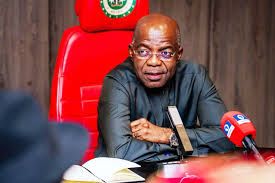
“‘Njiko Ka’ is about unity in diversity. We must not all agree; we are not zombies, but at the end of the day, superior arguments win,” Otti said.
The governor also urged Ndi Igbo to move beyond conventional trading and embrace manufacturing, digital technology and other emerging forms of economic activity.
He said his administration was investing in technology training programmes because the global economy was increasingly moving toward digital commerce and remote work.
“When I spend money here training my young people in digital technology, in TechRise, I know what I am doing,” Otti said.
He said that some Abia youths trained in digital technology were already working remotely for global companies, adding that the state would continue to prepare its people for the changing economy.
Otti described Ndi Igbo as resilient, hardworking, creative and self-reliant, saying the people’s culture should promote independence and self-confidence rather than dependence on palliatives.
The governor said Abia had recovered and was laying a foundation for sustained development, adding that the state’s economic future would increasingly be driven by manufacturing and digital commerce.
He said that the state’s combination of manufacturing and commercial activities gave it an advantage as it transitioned from conventional trading to digital trading.
In his keynote, Prof. Kingsley Moghalu, urged Ndi Igbo to move from producing reports to implementing the charter for sustainable development.
Moghalu, while delivering a lecture entitled “The Igbo Charter and Development of Alaigbo” said that charter should serve as a practical social contract for collective development.
He urged Ndi Igbo to keep the charter above partisan politics, saying it belonged to the people and should guide successive governments, political parties and generations.
Moghalu identified four immediate priorities, including teaching Igbo language in schools, establishing an Igbo digital marketplace, registering members of the diaspora and strengthening security to attract investment.
The former CBN deputy governor also advocated merit-based leadership and accountability in Igbo affairs, urging stakeholders to establish measurable targets and publish quarterly performance scorecards.
He said translating the charter into Igbo language and taking its contents to churches, town unions and social media platforms would help deepen public awareness and ownership.
Moghalu said the success of the charter would ultimately depend on moving from committees and reports to measurable actions capable of producing tangible development outcomes in Ala Igbo.
Earlier, the chairman of the occasion, Chief Onyema Ugochukwu, urged Ndi Igbo to use Igbo Day to reflect on their history, assess their present circumstances and chart a desirable future.
Ugochukwu called for remembrance of Igbo heroes and civilians who died during the Nigerian civil war, saying their sacrifices should be acknowledged without bitterness or recrimination.
He said that Ndi Igbo must continue telling their story and ensure the experiences of the war and its victims are not suppressed or forgotten.
Ugochukwu, however, urged Ndi Igbo to move beyond dwelling on past grievances, take their destiny into their hands and work towards building a brighter future.